
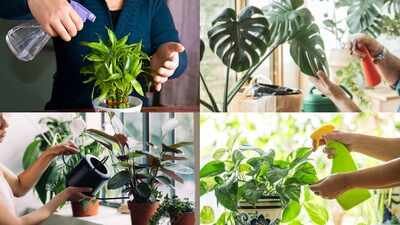
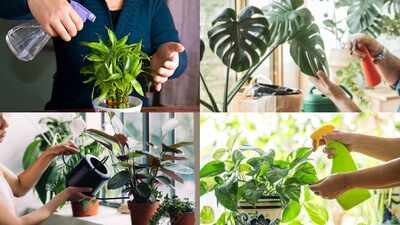
Soil has always been treated as the one non-negotiable ingredient in gardening, which makes it genuinely surprising that a handful of popular houseplants do perfectly well without it. Growing plants hydroponically, in nothing more than a jar or vase of water, has quietly become one of the more popular indoor gardening trends, and for good reason: it cuts out messy repotting, removes the guesswork around watering schedules, and lets you actually watch the root system develop through clear glass. Some plants take to this naturally because their root structure is genuinely different from soil-grown roots, adapted to draw oxygen and nutrients straight from water instead. Here are five worth trying if you’d rather skip the potting mix altogether.
Money plant (Pothos)
Money plant, more formally known as pothos, is close to the perfect starting point for soil-free growing, and it’s already one of the most common houseplants in Indian homes for exactly that reason. A cutting taken from an existing vine, ideally with three or four nodes, the small bumps along the stem where new roots emerge, roots readily in a glass or jar of water within a couple of weeks. It’s genuinely low-maintenance once established, tolerating low light far better than most houseplants, and a weekly water change is usually all the upkeep it needs to keep growing indefinitely.
Peace lily
Peace lily brings something most water-grown plants can’t: actual flowers. Its large, glossy leaves are attractive enough on their own, but the plant also produces its distinctive white spathe blooms sporadically through the year even when grown entirely hydroponically. It adapts comfortably to a soil-free setup, provided the roots stay submerged while the leaves and stem remain above the waterline, and it’s commonly credited with helping improve indoor air quality as a bonus. A bright spot with indirect light and an occasional dose of diluted liquid fertiliser keeps it flowering reliably.
Air plants (Tillandsia)
Air plants take the soil-free concept a step further than anything else on this list, since they don’t strictly need standing water either. In their natural habitat, these plants grow attached to tree branches and rocks rather than rooted in ground, absorbing moisture and nutrients directly through specialised structures on their leaves rather than through a root system at all. Indoors, that translates to an easy routine of misting a few times a week or an occasional short soak, followed by good airflow to dry out fully. Perched in a decorative holder or a shallow dish, they need no container of water sitting around at all.
Monstera
Monstera has become something of a design darling in recent years, and it turns out to be just as striking grown hydroponically as it is in soil. Its large, dramatically split leaves make a genuine style statement in bright, indirect light, and horticulturists note that success in water largely comes down to keeping the water clean and giving the plant something to lean on for structural support as it grows heavier. It’s a slightly more advanced choice than pothos or peace lily, since its size eventually demands more room and more frequent water changes, but the visual payoff makes it worth the extra attention.
Lucky bamboo
Lucky bamboo deserves its reputation as the classic soil-free houseplant, since it’s genuinely rare to find one sold growing in soil at all. Its stalks root and thrive in a shallow layer of water, often anchored with decorative pebbles, and it’s remarkably tolerant of being left alone for long stretches without any added fertiliser. Despite the name, it isn’t a true bamboo but a member of the Dracaena family, which explains why it shares that genus’s general hardiness and tolerance for lower light conditions found across most Indian homes.