

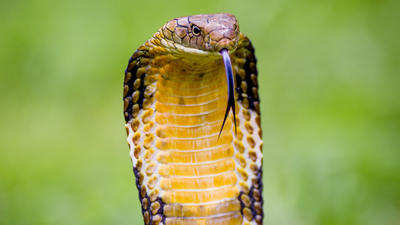
The King Cobra is one of the most feared snakes globally, renowned for highly potent venom, a long chevron-patterned body and a flared hood.But do you know, long before it became one of the most feared and fascinating snakes in Asia, the king cobra didn’t even carry the name we know it by today?Back in 1836, a Danish naturalist working in colonial India gave this giant, hood-flaring serpent its very first scientific identity. It was Hamadryas hannah, a name borrowed from Greek mythology that caused decades of taxonomic confusion before the snake finally got the name it carries today.The story of how the king cobra got renamed is an interesting one that took nearly three decades and even longer for its current name to be locked in as the official one.The naming story of the King Cobra is so typical that even now, in the 2020s, scientists are still revisiting and refining what we thought we knew about this species.
A new study splits the King Cobra into 4 species and they are still naming it!
Turns out the king cobra we all thought was just one species is actually four. A 2024 taxonomic study published in the European Journal of Taxonomy has split this iconic snake into four separate species, based on where they’re found: mainland Asia, most of maritime Southeast Asia, India’s Western Ghats, and Luzon, the main northern island of the Philippines, including two entirely new species.This isn’t entirely out of the blue, though. P. Gowri Shankar, who’s spent nearly 20 years studying king cobras, had actually researched this in 2021 with an earlier analysis. Even then, his team had spotted four separate lineages that looked like they could be their own distinct species.These included a king cobra population found only in India’s Western Ghats, a much more widespread group stretching from northern and eastern India all the way to China and Thailand, another spread across the Malay Peninsula and the Greater Sunda Islands as well as parts of the Philippines, and a fourth, isolated group living only on Luzon Island.Scientist wrote, “Here, as a follow up to Gowri Shankar et al.’s (2021) study, we present a formal taxonomic revision of the genus Ophiophagus, morphological diagnoses and descriptions of these four lineages, and describe two as new species. Our nomenclatural and taxonomic decisions have extensive implications for the content, diversity and distribution of members of this genus, as well as the management of snakebite, species conservation and prospects for future research”.
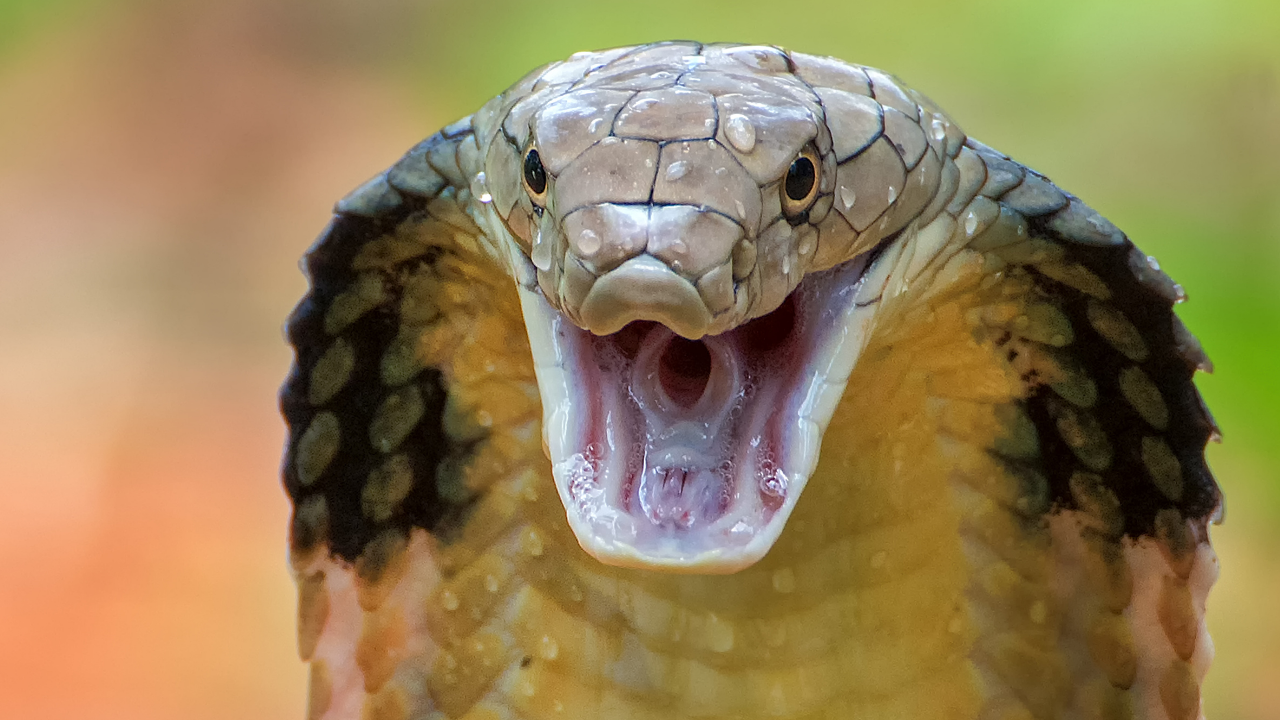
King Cobra
But how did the naming story begin?
The ‘king Cobra’ was first caught by a Danish Naturalist in the SundarbansIn 1836, Danish naturalist Theodore Edward Cantor formally described the king cobra for the first time, based on four specimens, three collected in the Sundarbans and one caught near Kolkata. He named it Hamadryas hannah, borrowing the genus name from hamadryads, tree nymphs of Greek mythology whose lives were bound to a single tree, similar to the snake’s strong territorial nature and preference for forest habitats.
Where the name “hannah” actually came from
The study says that Cantor never actually explained where the name “hannah” came from. But in 2016, Kraig Adler from Cornell University put forward a theory, suggesting that it was named after Hannah Sarah Wallich, who lived from 1820 to 1893. She was the eldest daughter of Nathaniel Wallich, a well-known botanist and physician who happened to be Cantor’s uncle and also hosted him while he was in Calcutta, right around the time this snake was first being described.And despite everyone knowing king cobras look and behave differently depending on where they’re found, nobody had actually gone back to properly re-examine Cantor’s original classification.
The original genus name had to be dropped
The genus Hamadryas hit a scientific roadblock decades later; it turned out the name was already in use. Entomologist Jacob Hübner had earlier applied “Hamadryas” to a group of butterflies known as cracker butterflies, making Cantor’s use of the same name for a snake genus invalid under naming rules. This left the king cobra without a proper genus name for years, until a new one was finally proposed.
Günther’s new name finally stuck for good
That naming confusion didn’t get sorted out until 1864, when British zoologist Albert Günther stepped in with a solution. He proposed a brand-new genus name for the king cobra: Ophiophagus, which literally comes from Greek words meaning “snake eater”, a suitable name, given this snake’s favorite meal is other snakes.But even then, the story wasn’t quite over. It took until 1945 for herpetologist Charles Mitchill Bogert to make the case, once and for all, that the king cobra was different enough from true cobras to deserve its own separate name. That’s when Ophiophagus hannah finally became the official, accepted name we still use today.