

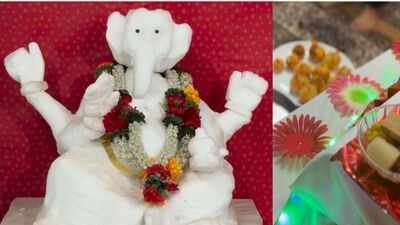
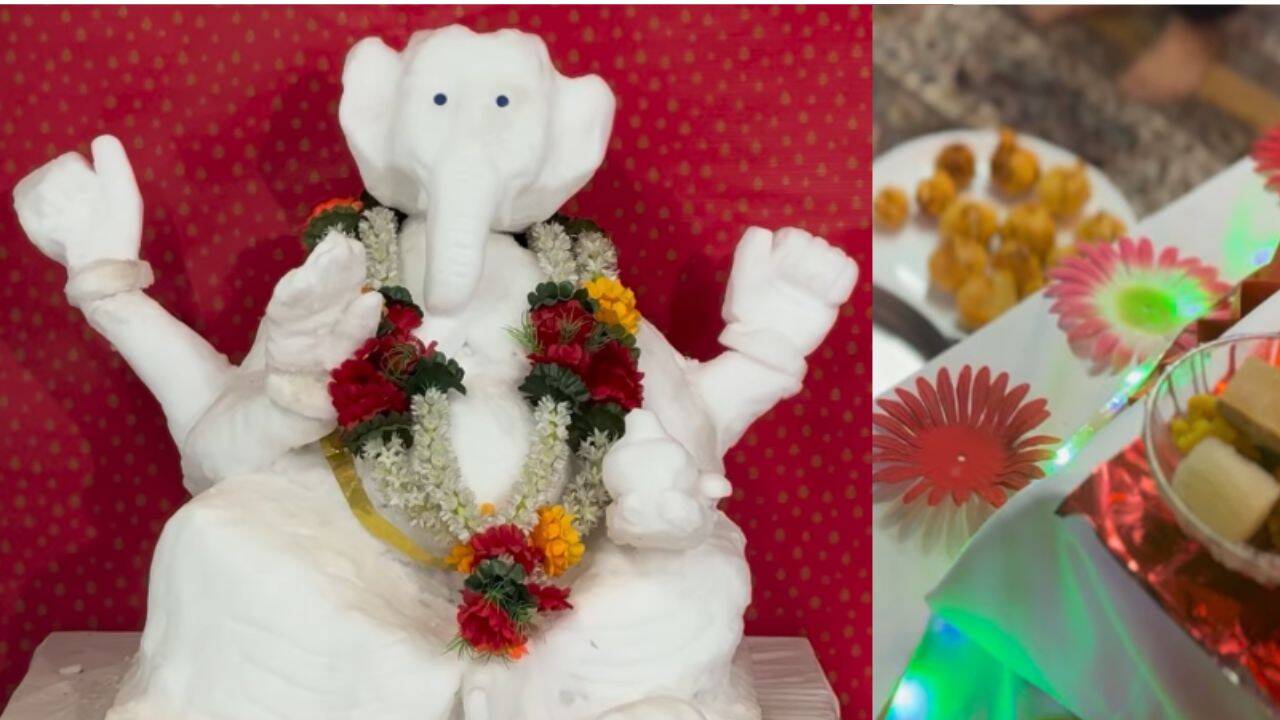
Far from the madding crowd, thousands of kilometres away from the noise and colour of India’s Ganesh Chaturthi celebrations, a small group of Indian scientists found their own way to celebrate Bappa and feel at home. We are not talking about elaborate pandals or feets long idols or processions. Instead, there was snow, and only snow.This interesting and unique celebration was held at India’s Maitri research station in Antarctica where researchers from the National Centre for Polar and Ocean Research (NCPOR) created a beautiful idol of Lord Ganesha from snow. There were proper puja, aarti, prasad and modaks too. It might sound like a simple celebration but it has captured the beauty of Indian festivals in the most isolated and exotic landscapes of the world. The celebrations by Indian scientists were like a reminder that even at the farthest edges of the world, familiar traditions can become a powerful connection to home.The Ganesh Visarjan video of the celebration
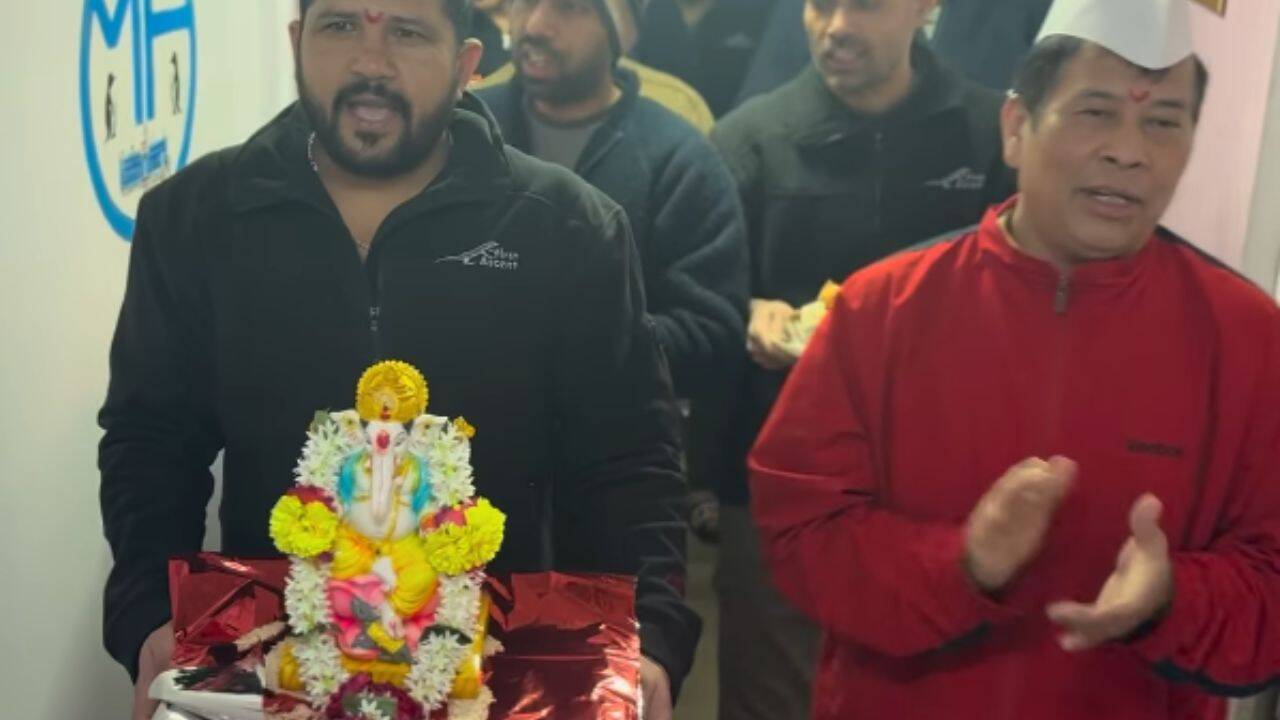
Ganesh Visarjan
The celebration was documented by Dr Anirudh Dhar, a doctor stationed at Maitri, who shared a video of the festivities on Instagram. In the footage, members of the team can be seen carefully sculpting their snow Bappa before gathering around the idol for the rituals.Dhar captioned the video,“Taking “eco-friendly immersion” to a whole new extreme 15,000 km away from home — our handmade snow Bappa is about as sustainable as it can get. Ganpati Bappa Morya!”The setting could hardly have been more different from IndiaAt first, the setting looks quite familiar. But it’s in Antarctica. Maitri, established in 1988, is located in the Schirmacher Oasis in East Antarctica. It is India’s second permanent research station on the continent and is operated by NCPOR under the Ministry of Earth Sciences.The station is an inland facility, about 100 km from the coast, and supports scientific research across areas including atmospheric science, glaciology, geology, meteorology and human physiology.For the scientists who spend months working in such an isolated environment, however, life at the station is not only about experiments, observations and scientific data. There is also the challenge of being separated from family, familiar food and the everyday cultural rhythms of home.The unique snow GaneshaThe scientists did not need a traditional clay idol to mark the festival. The landscape itself supplied what they needed. Snow was shaped into Ganesha, decorated and prayed.The most eco-friendly visarjanRather than taking the idol to an Antarctic water body, the team placed the snow Ganesha in a bucket of water inside the station. The idol gradually melted back into water. Dhar described it as an “eco-friendly immersion” in his social-media post, while joking about travelling thousands of kilometres to experience his first visarjan.In India, Ganesh Chaturthi is often associated with elaborate idols and, at the end of the celebrations, immersion in water. At Maitri, the same idea was adapted to the realities of polar life. The material was different, the setting was extraordinary, but the familiar sequence remained: make Bappa, worship him, share food and eventually bid him farewell.The celebration also shows another side of life at India’s Antarctic stations. Behind the scientific work is a community of people who spend long periods together in an environment unlike anywhere in India.
Ganesh Chaturthi
Yet no amount of infrastructure can completely replace the feeling of home. That is perhaps why small celebrations matter.Imagine eating a plate of modaks in the middle of Antarctica, where the surroundings can feel almost otherworldly. And Bappa arrived here in the most natural form possible made from the snow beneath their feet.And when the little idol finally melted away, what remained was not the statue, but the tradition, the memory, the feeling of being a little closer to home and Bappa.