
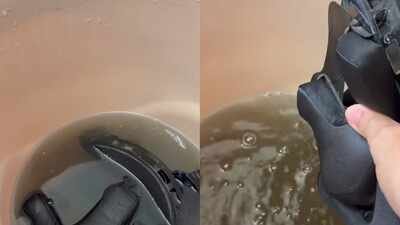
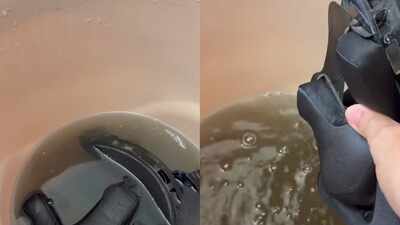
Most of us give our helmets a quick wipe on the outside and call it a day, never once thinking about what’s happening inside the padding pressed against our scalp every single ride. That’s exactly what one Instagram video is calling out. In the viral reel, a man is seen dunking his helmet padding into a tub of soapy water, only for the water to turn shockingly dark, almost black, within seconds. He explains that most helmet interiors are made in darker shades specifically so users don’t notice just how much grime is building up inside, and urges viewers to properly wash their helmet padding every three months to help avoid hair thinning and eventual baldness.
The video that’s making people rethink their riding gear
The demonstration itself is what makes the video so effective. Watching clean-looking soap water instantly turn murky and dark the moment the padding goes in is the kind of visual that’s hard to shake off, especially for anyone who rides daily and has never once removed their helmet’s interior lining to actually clean it. The video’s caption doesn’t hold back either, stating plainly that dirty helmets can cause hair loss and could be the reason someone is going bald, whether viewers want to agree with that or not.
Here’s the video:
Is there any truth to the hair loss claim
There’s genuine science behind why a dirty, sweaty helmet interior isn’t great news for your scalp, even if “causes baldness” is a slightly stronger claim than most dermatologists would make outright. Helmets create a warm, enclosed environment that traps sweat, oil, and dirt against the scalp for extended periods, and according to grooming and dermatology experts, this buildup can lead to increased bacteria or fungus on the scalp, which in turn can cause issues like boils, irritation, and acne along the hairline. Over time, that irritation, combined with friction from the padding rubbing against the same spots repeatedly, can contribute to a condition called traction or friction alopecia, where hair in specific areas starts to visibly thin.
Netizens react to the video
The comment section quickly filled up with people asking the practical questions the video didn’t fully answer. One user asked whether it’s genuinely that easy to remove the padding in the first place, while another simply requested a follow-up video specifically showing how to take the padding out, a fair ask, since plenty of riders likely have no idea their helmet’s interior can even be removed and washed separately from the outer shell.
Why this video struck a nerve
Helmet hygiene is one of those things that quietly falls through the cracks of most people’s routines, largely because it’s simply not visible day to day. Unlike a dirty shirt or a smelly gym bag, a grimy helmet interior stays hidden until someone actually pulls it apart and puts it through a wash, which is precisely why this video resonated so widely. It’s a simple, visual wake-up call about a habit most riders have never even considered adding to their routine.
A small habit worth picking up
Whether or not a dirty helmet is single-handedly responsible for anyone’s hair loss, the underlying advice holds up regardless: regularly cleaning your helmet’s interior padding is a genuinely good hygiene habit, both for your scalp and for keeping the helmet itself in better condition over time. For something that takes so little effort, a proper wash every few weeks to a few months seems like a reasonable trade-off, video going viral or not.Disclaimer: This article is based on a video and caption shared publicly on Instagram. Hair loss can have many causes, including genetics, hormones, and underlying health conditions, and anyone experiencing noticeable hair thinning should consult a dermatologist for proper diagnosis rather than relying on social media content alone.