
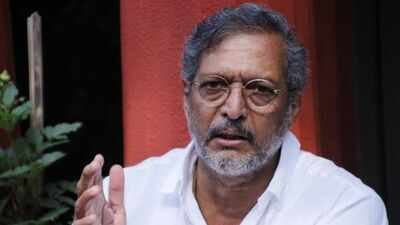
There are actors you admire. There are actors you remember. And then there are a handful you somehow carry with you.Nana Patekar was one of those.The veteran actor, filmmaker and theatre artiste died on October 8 at the age of 75 after he was found unconscious at his home in Goa. Doctors tried to revive him, but he could not be saved. Reports said he suffered a cardiac arrest.And yet, it feels strangely inadequate to begin with the circumstances of his death.Because Nana was never just about the end of a scene. He was about what happened in the middle of it. The pause before a line. The look that could change the temperature of a room. The sudden laugh. The sudden anger. That unmistakable voice which could sound like a threat, a joke, a confession or all three at once.He had a strange craft.You couldn’t quite see the machinery behind it.He didn’t perform in the conventional sense. He seemed to inhabit people. Sometimes they were good. Sometimes they were bad. Sometimes you couldn’t decide.And that was perhaps his greatest strength.He could be the villain and the man you rooted forNana could play black, white and every shade of grey in between.In Parinda, he gave menace a wounded, almost human face. In Angaar and Apaharan, he showed how frightening a character could become without turning him into a cardboard villain. In Krantiveer, he was rage, frustration and rebellion, but also a man who still had a conscience.Then came Welcome.Uday Shetty should, on paper, have been a gangster you feared. Instead, Nana made him one of the funniest characters in the film.That was another Nana speciality.He could stand in a scene with the intention of intimidating everyone and somehow make the audience laugh. His comic timing wasn’t about trying to be funny. He simply understood people. He understood how absurd anger could look, how quickly seriousness could collapse into humour.That timing was enviable.He knew when to speak and, perhaps more importantly, when not to.A pause from Nana could sometimes say more than another actor’s entire monologue.He didn’t act like he was waiting to be called a starThis is perhaps what made Nana particularly interesting off screen.He never seemed completely comfortable with the machinery of stardom.In interviews, he could be blunt to the point of being startling. He didn’t dress up his opinions particularly well for public consumption. He could tell you if he didn’t like a script. He could tell you if he thought something was unnecessary. And he was never particularly interested in pretending that every film he made was a masterpiece.In a 2025 interview, he said he had become selective about work and had no problem saying no to a bad script. He also described himself as a “switch-on and-off kind of actor”, saying that he left the character behind once the shooting ended.That sounds simple. But it says something about the man.Nana didn’t appear to believe that acting had to consume his entire identity.There was a life outside cinema.There was the village. There was the farm. There were animals. There was cooking. There was the quiet life he increasingly preferred to the noise of Mumbai.In a 2023 interview with Filmfare, he spoke about his 12-14 acre farmhouse, where he spent time during the pandemic with dogs, cows and bullocks. He also said he had helped farmers living around him.And that side of Nana perhaps explains something that people sometimes missed about him.He could be rough in conversation. But he was not indifferent.The farmer in him was always thereNana’s relationship with farmers wasn’t a celebrity cause he picked up for a few photographs.It became a significant part of his life.In 2015, he and fellow Marathi actor Makarand Anaspure started Naam Foundation, responding to the drought and growing distress among farmers in Maharashtra. The organisation works on issues including water conservation, rural development and farmer welfare.The beginning was painfully simple.Nana had watched the family of a farmer who had died by suicide being interviewed on television. It stayed with him. In an interview the following year, he said he had money saved and wondered what good it was doing sitting with him.He later spoke repeatedly about something beyond money: dignity.Farmers, he said, needed assurance that they weren’t alone.That was Nana speaking without the armour of the actor.In May this year, just months before his death, he was still talking about farmers and their emotional distress. At a gathering in Nagpur, he urged farmers battling suicidal thoughts to reach out for help and spoke about how the agrarian crisis had changed his own understanding of life.He once said that rural life gave him a sense of purpose that the glamour of the city couldn’t.Perhaps that was the real Nana.The man who could play a gangster on Friday and worry about a farmer’s crop on Sunday.He came from hunger, work and theatreNana was born Vishwanath Patekar in Murud-Janjira, Maharashtra, in 1951. He started theatre while still in school, studied at the Sir J.J. Institute of Applied Art and worked at an advertising agency before finding his way into films.Theatre never really left him.And perhaps that is why there was always something slightly different about the way he performed.He didn’t have the polished quality of someone who was trying to look like a movie star.He had lived a little.He had known struggle. He had spoken about hunger and humiliation in his childhood and how those experiences shaped him.There was texture in his performances because there was texture in the man.He could play a policeman, gangster, father, politician, soldier, drunk, comedian or broken old theatre actor and make each one feel like a different human being.Natsamrat was almost a summation of that gift. A great stage actor, stripped of his applause and left with his memories, anger, loneliness and pride. Nana didn’t merely play the character. He seemed to understand the ache of a performer who has spent his life being watched and then suddenly finds himself alone.Maybe the best way to remember him is without making him larger than lifeNana didn’t need that.He was already larger than life on screen.Off screen, he seemed to prefer something much smaller.A farm. A village. Animals. Good food. A decent script. A conversation without too much pretence.He had awards too, of course. Three National Film Awards, Filmfare honours across acting categories and the Padma Shri in 2013.But his legacy isn’t really a list of trophies.It is a voice.It is a pause.It is the way he could make a room uncomfortable with one look and then make everyone laugh seconds later.It is Uday Shetty making us laugh. It is Krantiveer making us angry. It is Parinda making us uneasy. It is Natsamrat making us ache.And somewhere away from all of that, it is Nana sitting on his farm, talking about farmers, animals, life and the things that actually matter when the lights go off.He once said, “You have to prove yourself every day.”He did.Again and again.Perhaps that is why Nana Patekar never really belonged to one category. Not hero. Not villain. Not comedian. Not character actor.He was all of them.And then, when the camera stopped, he was simply Nana.That may be the part people will miss most.