
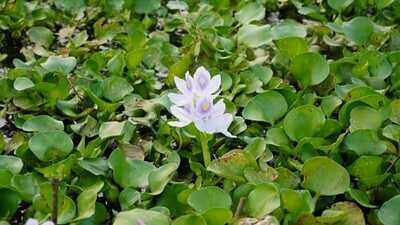
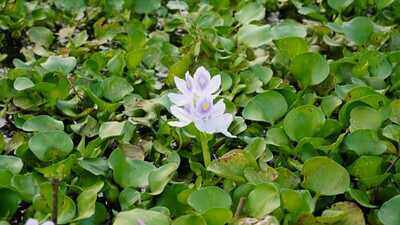
The water hyacinth (Eichhornia crassipes) was imported into several countries, including India as an ornamental aquatic species to beautify ponds and gardens. Years later, the aquatic weed grew rapidly and started invading natural water bodies, forming floating mats that are harmful to the environment and to human activities. The weed is currently considered to be one of the world’s worst invasive aquatic plants, according to PubMed (National Library of Medicine).
The story of ornamental beauty becoming invasive menace
The water hyacinth is native to the Amazon Basin region in South America and naturally grows there without harming the ecological balance. During the last decades of the 19th century, the water hyacinth was transferred to other places because of its beautiful flowers and luxuriant foliage. The plant became very popular in the gardens as an ornamental species. But once it entered the natural waters, it spread rapidly as there were no natural predators to control it, according to ResearchGate.
Why did the plant spread so rapidly?
The water hyacinth is the fastest-growing species of aquatic plant. It multiplies by both seeds and vegetative growth allowing one plant to turn into thousands of others in a short time under proper conditions. Additionally, it develops rapidly in the presence of polluted waters containing high levels of nutrients such as nitrogen and phosphorus. Floating leaves and the fibrous root system allow the plant to move across water bodies, colonising new environments very fast.
A growing danger to rivers and wildlife
When spreading, water hyacinth plants form dense floating mats which cover the surface of lakes, rivers and reservoirs. Due to that, no light enters the bottom layers of the water body making underwater plants unable to conduct photosynthesis and making the water depleted with oxygen. The resulting lack of oxygen endangers fishes and other aquatic species and disrupts the balance in natural ecosystems. Studies have proven that such infestation leads to a decrease in biodiversity and change of functioning of freshwater ecosystems.
The consequences of the invasion reach far beyond nature
Moreover, water hyacinth creates many economic and social problems as well. Denser mats hinder water flow in irrigation canals and restrict navigation. In some cases, waterways get clogged and become breeding places for mosquitoes and other insect carriers of diseases. Governments have to spend a lot of money on the removal of the weed annually. Nevertheless, the plant grows rapidly again in case of no permanent management.
How to manage water hyacinth
Scientists claim that the management of water hyacinth invasion requires combined efforts rather than the use of only one approach. For example, mechanical removal and biological management with the help of natural consumers of water hyacinth in some cases have proved their effectiveness. Additionally, under strict control, the use of herbicides might be helpful. Moreover, according to PubMed, the scientists note that reduction of water pollution and runoff is necessary for prevention of new infestations.