



Stars are typically associated with the sky and are known for their mysterious sparkle. Even though science has provided enough explanations for their twinkle, they are still fascinating. The star shape appears in a few other forms on Earth, such as star fruit and starfish. Surprisingly, there are a few beaches in southern Japan where stars appear on the beach as well. The sand on these beaches holds a secret, a natural wonder that is captivating to the eye.Seashells containing pearls or a piece of coral are what are usually considered treasures on a beach, but the white shores of Okinawa hold something more. Strangely, it is a grain of sand. Its appeal lies in the fact that the grains of sand there are shaped like tiny stars.These grains of sand are known as hoshizuna, or “star sand” in Japanese. These minuscule particles are famously found on beaches in the Yaeyama Islands, including Taketomi, Hatoma and Iriomote. The curiosity surrounding this natural phenomenon has led to scientific explanations as well.
The tiny creatures behind the mystery
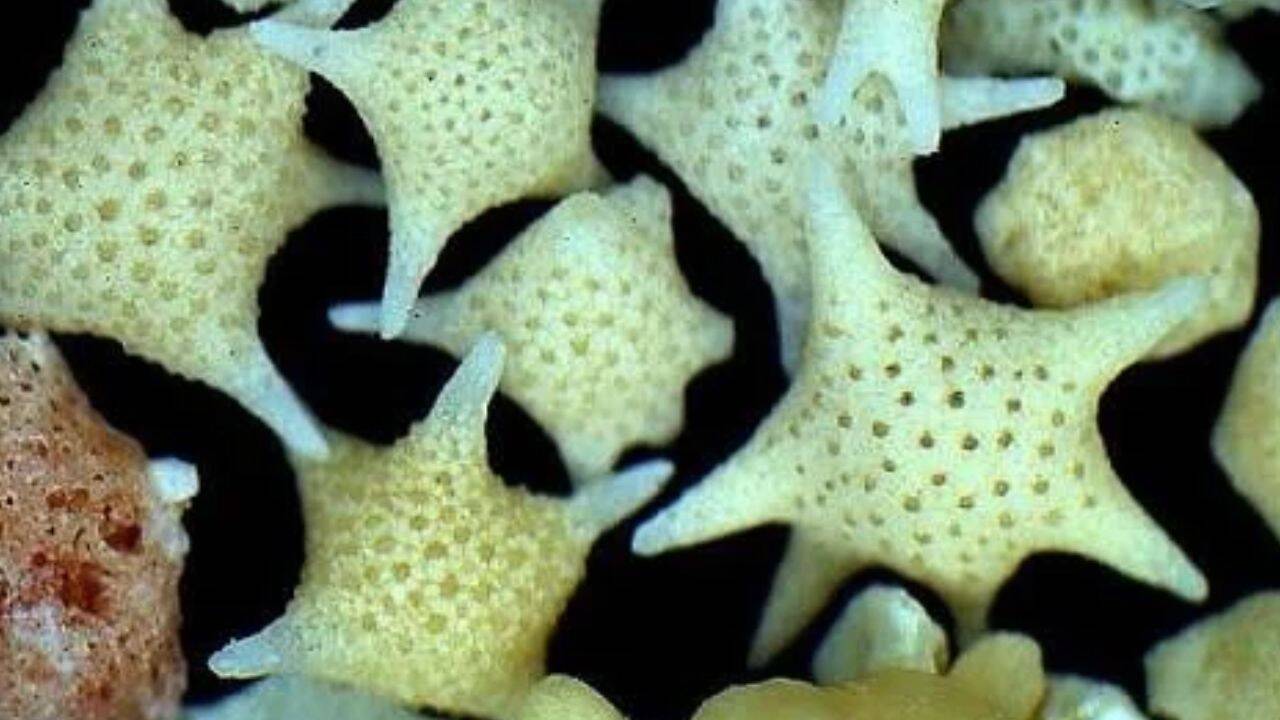
Magnified star sand found in Okinawa (Image Credit: Wikimedia Commons)
The little star-shaped sand granules can be explained through marine biology. These tiny shapes are actually the skeletal remains of microscopic marine organisms called foraminifera. More specifically, the star-shaped grains found around Okinawa are associated with a single-celled marine species called Baculogypsina sphaerulata. Their delicate shells are made of calcium carbonate, the same mineral found in limestone and many seashells. According to the Japan Tourism Agency, these organisms also contribute to the emerald-green appearance of the surrounding waters.Unlike much of the usual beach sand formed when rocks break down over time, star sand originates from living marine organisms. These organisms are associated with marine vegetation, and after they die, their remains are washed ashore and accumulate on the beach. In a handful of sand, one can observe many of these tiny star-shaped structures.Some look like neat little stars drawn by a child; others have more irregular points. Their shape is part of what makes them so captivating. A beach that seems ordinary from a distance becomes wonderfully unique when viewed up close.
When the stars came down to Earth
The Japan Tourism Agency records an old tale associated with Aiyaru Beach on Taketomi Island. According to local folklore, the tiny star-shaped forms are the bones of baby stars that were eaten by a great sea serpent. It is believed that burning them in an incense burner allows the star-children to return to heaven. This legend gives the unusual grains a magical significance in local tradition.
A beach best explored with a magnifying glass
One of the best-known places to look for star sand is Kaiji Beach on Taketomi Island, also called Star Sand Beach. The beach is part of the Yaeyama Islands in Okinawa Prefecture, close to Ishigaki Island. Star sand can also be found on other islands in the region, although the amount visible on any particular stretch of shore varies.
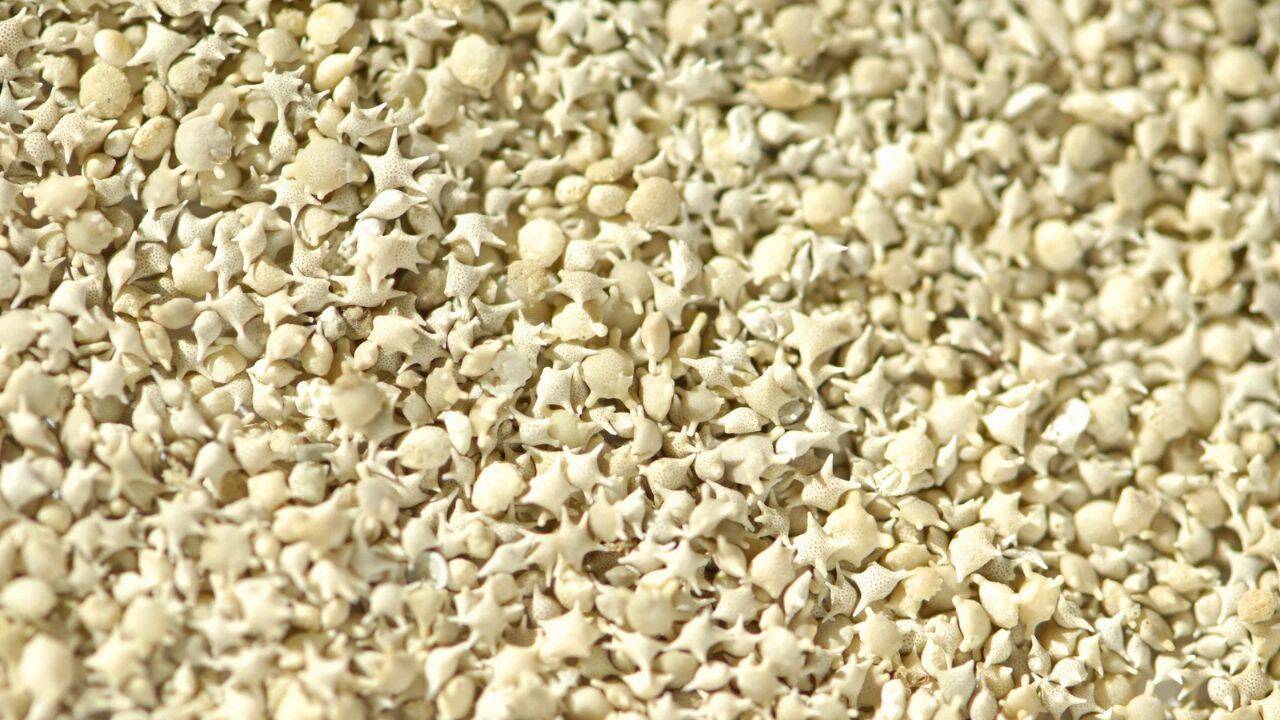
Representative Image (Image Credit : Canva)
Bring a magnifying glass if you can. It turns a casual beach walk into a treasure hunt, letting you distinguish the little star-shaped remains from the surrounding grains. Be patient when looking for these tiny stars, as they can be difficult to spot at first.Taketomi is worth exploring beyond its unusual beach sand. The island is known for its traditional Ryukyu village, white coral-sand lanes, red-tiled roofs and stone walls. You can explore on foot or by bicycle, then head to Kondoi Beach for a swim. Kaiji Beach itself is not a swimming beach because of strong currents, so stick to looking for star sand from the shore.
A souvenir that belongs on the beach
The official Okinawa travel guide states that taking star sand from Kaiji Beach is prohibited. This rule helps protect the beach’s distinctive natural feature. Although star sand is sold in small bottles and incorporated into jewellery and crafts as souvenirs, visitors should not collect it directly from the beach.The rule reflects the importance of protecting the natural environment. These are not simply decorative particles that can be artificially manufactured; they are the remains of marine organisms and form part of the coastal environment. Their presence can also offer insights into marine ecosystems.
Planning a star-sand escape
Taketomi Island is a short ferry ride from Ishigaki Island, which serves as a useful base for exploring the Yaeyama group. From Ishigaki Port, the journey to Taketomi generally takes around 10–15 minutes by high-speed boat. Once there, you can travel by bicycle, walk or use local transport to reach the beaches. Check ferry schedules before your visit, as services can change with weather conditions.