
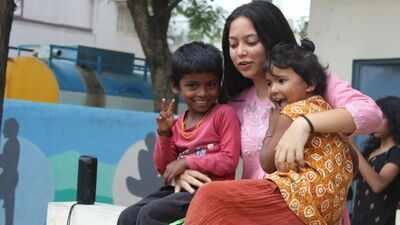
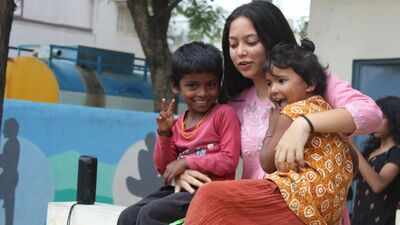
On some Saturday mornings in Bengaluru, 17-year-old Asavari Agrawal arrives at a government school to find children waiting eagerly for her. Some rush to hug her, while others pull her towards a game or show her something they have been waiting to share.For Asavari, these visits are not occasional charity activities. They are a commitment she has kept for nearly five years. What began as simple visits to spend time with children has grown into Shape the Future, a youth-led initiative that brings educational activities, sports, health programmes and reading opportunities to children from underserved communities.One of its most visible achievements is a library at Mullur Colony Government School. An unused room that once served as a storeroom has been transformed into a welcoming reading space with more than 2,000 books. The initiative now has around 50 student volunteers and reaches approximately 250 children across government schools and residential homes in Bengaluru. But Asavari believes its most meaningful contribution is not the number of activities it organises. It is the relationships its volunteers build by returning week after week.
From childhood visits to a larger purpose
Asavari’s association with volunteering began when she was much younger. Her mother introduced her to community service, taking her along to Karuna Shreya hospice and Thayi Mane, a home for orphaned and destitute children. Initially, Asavari saw these visits as opportunities to play and make friends. As she grew older, however, she began noticing the differences between the opportunities available to her and those accessible to the children she met. In 2021, she decided to introduce them to table tennis, a sport she was already familiar with. She brought equipment, sports shoes, clothes and fitness materials for a session involving around 100 children.The response encouraged her to think beyond a single activity. In 2022, at the age of 13, she started Shape the Future to make learning, sports and other experiences more accessible to children. Over time, the initiative expanded to include art sessions, fitness activities, health and eye camps, menstrual hygiene awareness and educational programmes. Student volunteers joined the effort, helping organise activities and reach more children.
How an unused room became a library
The idea for the library came from conversations with the children themselves. Asavari and her volunteers would ask them what they wanted to learn, what they dreamed of becoming and what they wished they could read. The children wanted books beyond their regular school textbooks. However, Mullur Colony Government School had no dedicated library where they could explore different subjects and stories.Asavari and her team decided to change that. Over nearly two years, student volunteers approached schools and communities to collect donated books. The collection eventually crossed 2,000 titles. They also identified an unused room at the school that could be converted into a library. But the space needed considerable work. The team repaired the flooring, repainted the walls, cleaned the room and arranged shelves, furniture and lighting before bringing in the books.The books were sorted and arranged to make them accessible to children of different ages. The transformation gave students a place to discover stories and subjects outside their classroom lessons. For the school’s headmistress, Victoria, the change was significant. Earlier, students had access mainly to textbooks. The new library gave them a wider range of reading material and a space they had not had before.
Why showing up matters more than one-time drives
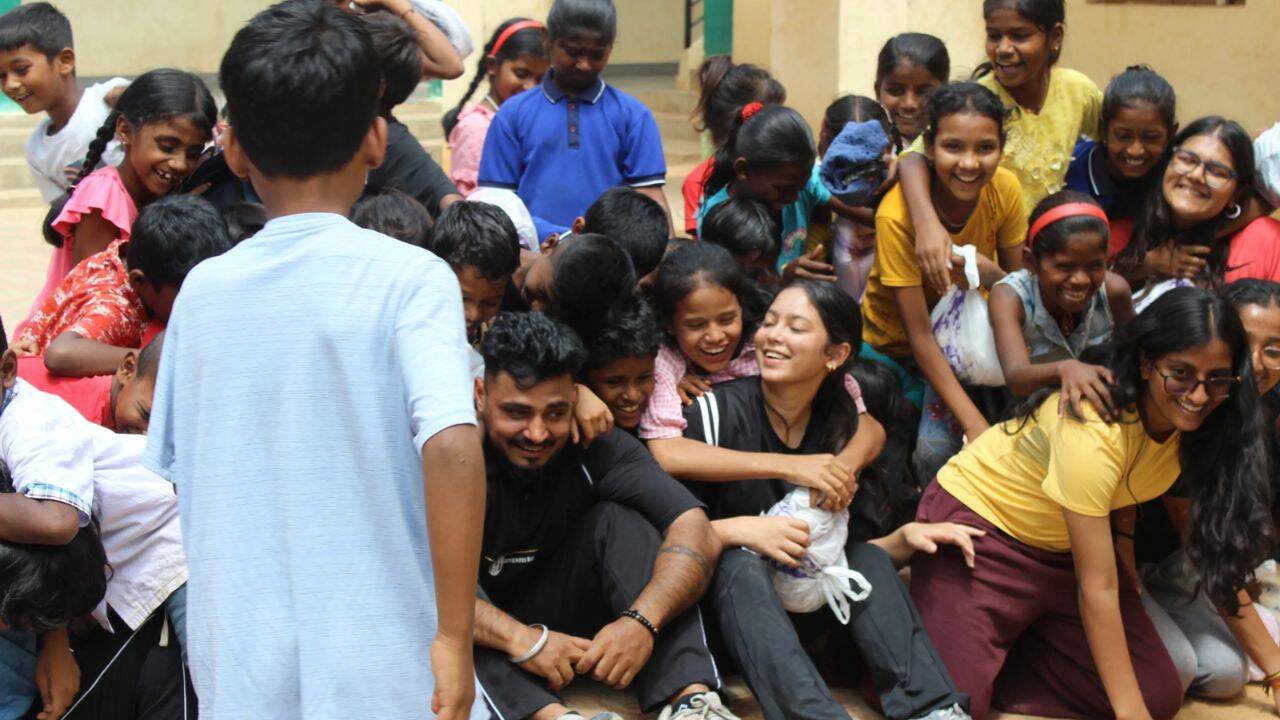
Shape the Future’s work extends beyond collecting books and organising events. Asavari places particular importance on the trust that develops when volunteers maintain regular contact with children. Around 10 to 15 volunteers may join a typical weekend session, depending on their academic schedules. Activities can include sports, art, lessons and games. The larger initiative has around 50 student volunteers and has reached roughly 250 children.The relationships have become personal. At the government school and residential homes, children recognise volunteers, remember their names and look forward to their visits. Asavari has also witnessed how much emotional support can matter. One boy who recently lost both his parents told her that she was the only family he had left. Such moments have made her more aware of the responsibility that comes with building close bonds. She believes children need people who treat them as equals, listen to them and remain present, rather than visitors who arrive for a single donation drive and disappear.
Building something that can continue without her
Balancing Class 12 studies, college applications, national-level table tennis, Bharatanatyam and piano is not easy. Yet Asavari has continued to reserve time for volunteering every weekend. She has also supported the initiative through her own earnings, including money from her Bharatanatyam Arangetram and table tennis prizes. At one point, she even sold her piano and table tennis table to support the work.Now, as she prepares to apply to universities in the United States and the United Kingdom, she is thinking about how Shape the Future can continue when she leaves Bengaluru for higher studies. She is distributing responsibilities among volunteers and giving younger students greater roles in fundraising, operations, social media and volunteer coordination. The aim is to ensure the initiative does not depend on her presence alone.From childhood visits to a network reaching hundreds of children, Asavari’s journey has grown steadily through small, consistent efforts. The library is one lasting result, but the bigger lesson she hopes to leave behind is that meaningful change does not always require a large organisation or grand plans. Sometimes, it begins with a few children, a room full of books and someone willing to keep coming back.