
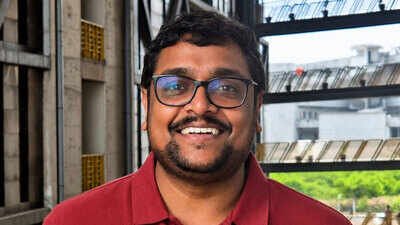
NEW DELHI: The Indian Institute of Technology (IIT) Bombay has announced that Associate Professor Karthikeyan Lanka has been selected for the prestigious National Academy of Sciences, India (NASI) Young Scientist Platinum Jubilee Award 2026 in the Earth Sciences category. The institute shared the announcement on its official social media handle, congratulating the faculty member on the national recognition for his contributions to earth sciences and climate research.Prof. Lanka is an Associate Professor at the Centre of Studies in Resources Engineering (CSRE) and is also associated with the Centre for Climate Studies at IIT Bombay. He has been serving as an Associate Professor since February 2025 after joining the institute as an Assistant Professor in January 2019.• IIT Roorkee hydrologist Prof. Ankit Agarwal receives NASI Young Scientist Award 2026: Complete listResearch recognised by NASIProf. Lanka’s research focuses on ecohydrology, satellite remote sensing and land-atmosphere interactions, with particular emphasis on understanding how soil moisture influences the Indian monsoon, heatwaves and agricultural droughts.His research group develops advanced algorithms to estimate soil moisture using low-frequency microwave satellite observations, including data from NASA’s Soil Moisture Active Passive (SMAP) mission. Since dense vegetation and fragmented agricultural fields often make satellite-based soil moisture estimation over India challenging, his team has developed methods that account for seasonal vegetation changes, significantly improving the accuracy of soil moisture retrievals across agricultural landscapes.Another important area of his research examines how land conditions influence extreme weather events. His studies have shown that soil moisture plays a crucial role in determining the intensity and development of heatwaves across the Indo-Gangetic Plains, demonstrating that land surface conditions are as important as atmospheric circulation in shaping extreme heat events. His research has also explored how soil moisture deficits contribute to agricultural droughts, affecting crop productivity and water-use efficiency.Developing tools for climate-resilient agricultureBridging scientific research with practical applications, Prof. Lanka’s group has developed one of India’s first operational subseasonal agricultural drought forecasting systems.Developed in collaboration with the Mahalanobis National Crop Forecast Centre (MNCFC) under the Ministry of Agriculture and Farmers Welfare, the system provides weekly agricultural drought forecasts across India at a spatial resolution of 9 kilometres, with lead times of up to four weeks. The forecasting system is designed to support climate-resilient agricultural planning and decision-making.Apart from his research, Prof. Lanka currently serves as an Associate Editor of the Journal of Hydrology and the IEEE Journal of Selected Topics in Applied Earth Observations and Remote Sensing (JSTARS). At IIT Bombay, he has also received the Early Research Achiever Award and the C1973 Research Excellence Award for his research contributions.Academic journeyProf. Lanka obtained his PhD in Civil Engineering from the Indian Institute of Science (IISc), Bengaluru, under the supervision of Prof. D. Nagesh Kumar. During his doctoral studies, he was awarded the prestigious Fulbright-Nehru Doctoral Research Fellowship, which enabled him to conduct research at Princeton University in the United States.He later carried out postdoctoral research at Clemson University, USA, before joining IIT Bombay in 2019. He also earned his Master’s degree in Civil Engineering from IISc Bengaluru, graduating with a Gold Medal. Earlier, he completed his Bachelor’s degree in Civil Engineering from SASTRA University, Thanjavur.About the NASI Young Scientist Platinum Jubilee AwardThe NASI Young Scientist Platinum Jubilee Award is conferred by the National Academy of Sciences, India (NASI) to recognise outstanding contributions made by early-career researchers across various scientific disciplines.According to IIT Bombay, the honour recognises Prof. Lanka’s significant contributions to earth sciences, satellite remote sensing, climate studies and hydrological research, with a particular focus on improving the understanding of India’s climate and developing solutions that support sustainable agriculture and water resource management.
NASI Young Scientist Award 2026 recipients
• Dr. Akanksha Singh (CSIR-CIMAP): Her award-winning research focuses on crop protection and production. At the Central Institute of Medicinal and Aromatic Plants (CIMAP), she works on biological solutions to agricultural stress, improving crop yield, and enhancing the resilience of economically important medicinal plants.• Dr. Anindita Das (IACS Kolkata): Recognized in the Applied and Interdisciplinary Sciences domain, her research focuses on smart materials and molecular assemblies. She combines chemistry and materials science to develop functional molecular structures with potential applications in energy and bio-interfacing technologies.• Prof. Ankit Agarwal (IIT Roorkee): A faculty member in the Department of Hydrology, his research addresses hydro-climatic extremes and multi-scale climate complexities. He uses data-driven models, wavelets, and complex networks to improve predictions of extreme weather events such as floods and droughts.• Dr. Antara Banerjee: Her research emphasizes scientific leadership and translational biology. She focuses on niche therapeutic applications and biomedical innovations, bridging laboratory-scale cellular biology with impactful public healthcare solutions.• Dr. Akshay Singh (IISc Bengaluru): Based in the Department of Physics, his research explores the fundamental properties of two-dimensional (2D) quantum materials. He uses ultrafast optical spectroscopy to study excitons and spin dynamics, advancing next-generation quantum computing and nanoscale optics.• Dr. Ashutosh K. Singh (CeNS): At the Centre for Nano and Soft Matter Sciences (CeNS), his research bridges nanomaterials and soft matter engineering. His work focuses on responsive optoelectronic materials and functional thin films for energy-harvesting applications.• Dr. Shubham Sahay (IIT Kanpur): A faculty member in the Department of Electrical Engineering, his research centers on nanoelectronics and semiconductor devices. He develops hardware architectures for neuromorphic computing, enabling low-power memory arrays for artificial intelligence.• Dr. Vishal Govind Rao (IIT Kanpur): Based in the Department of Chemistry, his research advances single-molecule spectroscopy and photochemistry. His laboratory studies how nanocrystals interact with light, opening new possibilities for solar energy conversion and chemical sensing.• Dr. Soumya Prakash Dash (IIT Bhubaneswar): Affiliated with the School of Electrical and Computer Sciences, his research focuses on wireless communications and signal processing. His work contributes to optimizing architectures for 5G-Advanced and future 6G communication networks.