
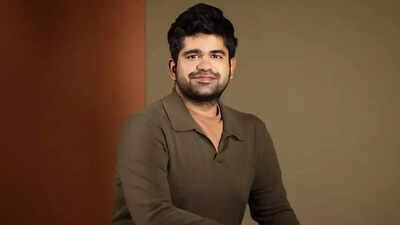
When students prepare for competitive exams, it often feels as though one rejection can define an entire future. Missing a preferred branch, failing to secure admission to a dream university or watching a startup collapse can seem like the end of the road.Aravind Srinivas’ journey tells a very different story.Long before he became the co-founder and CEO of Perplexity AI—one of the world’s fastest-growing artificial intelligence companies—Srinivas collected a series of disappointments that many would have considered career-ending. He couldn’t get into Computer Science at IIT Madras, narrowly missed changing his branch by just 0.01 CGPA, was initially denied entry into a machine learning course, faced rejection from MIT for his PhD application and watched his first startup fail.Today, he leads a company valued in the billions, has worked at OpenAI, Google and DeepMind, and regularly shares advice with students navigating an AI-driven future.His story reminds students that success is rarely built on uninterrupted victories. More often, it is built on how one responds after hearing “no.”
The IIT rejection that changed his path
Like thousands of engineering aspirants, Aravind Srinivas dreamed of studying Computer Science at IIT Madras. His JEE rank, however, fell short of the cutoff.Instead, he joined the Electrical Engineering dual-degree programme.For many students, not getting their dream branch often feels like an irreversible setback. Srinivas chose a different approach. Rather than allowing the branch to define his future, he focused on building the skills that genuinely interested him, particularly artificial intelligence and machine learning.His determination faced another hurdle after the first year.He attempted to switch to Computer Science through IIT Madras’ branch-change system but missed the required CGPA cutoff by an astonishingly small margin—just 0.01.It was another rejection.Yet, instead of giving up on AI, he continued learning independently.
When even a machine learning class said ‘No’
The setbacks didn’t stop there.According to Srinivas, he was initially denied admission to a machine learning course because a professor believed Electrical Engineering students would struggle in the subject.Ironically, the field he was once discouraged from entering would later define his entire career.His research eventually took him to one of the world’s leading universities.After IIT Madras, Srinivas pursued a PhD in Computer Science at the University of California, Berkeley, where he conducted cutting-edge research in deep learning, reinforcement learning, computer vision and generative AI. During this period, he also interned at OpenAI, Google and DeepMind, collaborating on some of the technologies that now underpin modern artificial intelligence.
Even MIT said no
Students often believe that successful people rarely face rejection from elite institutions.Srinivas’ experience proves otherwise.Before joining Berkeley, he had applied for a PhD at the Massachusetts Institute of Technology (MIT).His application was rejected.Rather than interpreting the decision as a verdict on his potential, he continued pursuing research elsewhere.Berkeley became the platform from which he built a career that would eventually lead him to OpenAI and later to founding Perplexity AI.
His first startup also failed
Even after working at OpenAI as a Research Scientist, success did not arrive instantly.Before launching Perplexity, Srinivas built a Twitter search product.The idea eventually collapsed after changes to X’s API rendered the product unusable.For many entrepreneurs, such a setback would have discouraged future ventures.Instead, Srinivas viewed failure as another lesson.In August 2022, he co-founded Perplexity AI with the vision of building an AI-powered answer engine capable of helping users search, learn and explore information more effectively.Within just a few years, Perplexity emerged as one of the most talked-about AI companies globally.
His advice for students: Move fast, keep learning and never stop asking questions
Speaking at the University of California, Berkeley’s Winter Commencement, Srinivas reflected on what students need to succeed in the age of artificial intelligence.Rather than focusing on grades or job titles, he emphasised three principles.
Velocity matters more than perfection
He urged graduates to move quickly, experiment fearlessly and avoid waiting for perfect circumstances.According to him, people who move faster learn faster, fail faster and ultimately grow faster.He described velocity not as a defensive advantage but as a “superpower” that continuously transforms a person.
Learning should never stop
Srinivas warned that knowledge has an expiry date.Just as money loses value because of inflation unless it grows, knowledge also becomes outdated if people stop learning.His message was clear: keep compounding your knowledge throughout your career.
Curiosity is the ultimate competitive advantage
Perhaps his strongest message was that education is not about memorising answers.It is about asking better questions.He argued that the most successful innovators are rarely those with all the answers. Instead, they are the ones who remain relentlessly curious—constantly asking “Why?”, “How?” and “What if?”
What students can learn from Aravind Srinivas’ journey
For students preparing for JEE, NEET, GATE, UPSC or campus placements, Srinivas’ story carries several powerful lessons.A missed cutoff does not end a career.A rejected application does not define your ability.A failed startup does not mean you are not an entrepreneur.Sometimes, the biggest opportunities emerge only after the biggest disappointments.Aravind Srinivas did not build one of the world’s most influential AI companies because everything went according to plan. He built it because every rejection became an opportunity to learn, adapt and continue moving forward.In an era where artificial intelligence is reshaping industries faster than ever before, perhaps his most important lesson for students is also the simplest:Never stop learning. Never stop asking questions. And never let rejection decide your future.Disclaimer: This article is based on publicly available interviews, speeches and professional information shared by Aravind Srinivas and is intended for educational and inspirational purposes.