
Rugs and carpets instantly take us back to Arabian Nights, the one on which Aladdin flew, but one of them placed right at the center of our homes can just add the right character to our homes.While most of us think of these rugs as an afterthought, something that comes after all the decor in a room is complete, as an object that adds a splash of colour to tie a sofa and a coffee table together.
But did you know that rugs have a different role in a room altogether?
A rug, placed the right way, can change how big or small a room feels, without anyone touching a wall or moving a single piece of furniture. It’s one of those design tricks that works silently, in the background, until you notice a room suddenly “breathes” better than it used to.To get an insight into this, we talked with Purva Gokhale, Concept Designer and Founder of D20 Elements, who explained that the real secret lies not in matching a rug to a floor, but in using it to shape how the eye reads space.
Representative Image
How does placing a rug or carpet in a room impact the size of the room?
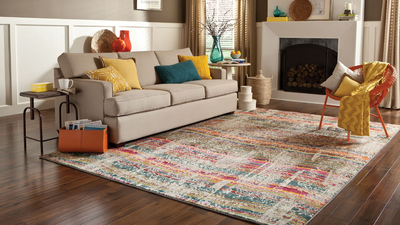
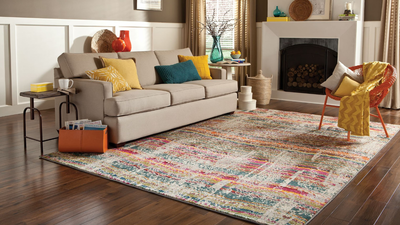
Purva Gokhale told the Times of India, “the spaciousness of a room is capped by its floor and ceiling, but more often than we realise, the rug underfoot is doing the quiet work of stretching that perception or (at times) shrinking it.”The first mistake most people make, Gokhale says, is treating rug shopping like a checklist item. She explains, “the secret is to use the correct scale for a rug instead of size charts. A rug that’s too small will translate into cramped and busy while one that’s too large will overpower the room, erasing the boundary between walls and floor.”
How to find the right rug for your room to maintain the right balance?
In order to find the right size of rug for your room, Gokhale describes, “the sweet spot sits in between wherein you have enough bare floor space and at the same time enough rug to hold major furniture pieces into one continuous plane.” The trick that actually fools the eye, she says, is “floating furniture, held together, with space still visibly breathing around it.” And forget the go-to sizes people default to, she advises to “feel free to skip the standard 5×7 or 6×8 sizing. The room should dictate the rug, and not the other way round.”
Placement of the rug is as important as the size of the rug
In order to make the room feel airy and spacious, Gokhale suggests letting furniture legs rest partly on the rug rather than keeping it visible around every edge, mentioning that “vanishing edges suggest infinity, not interruption.” Entryways need special care too. She says, “never let it start at the door. Two to three feet of bare floor as you enter gives you foreground, the rug becomes middle ground, and the furniture sits beyond it. That’s layered depth.”Gokhale recommends, “Run the rug along the room’s longer axis, with any stripe or motif pointing away from the entry.”The logic behind this is simple and depends on how the eye perceives it “across the width, it widens a room, while along the length, it stretches it further.” Pattern choice matters here too, and suggests preferring “large, open motifs with generous negative space,” pointing out that “dense designs can also cause visual noise, making the room feel more closed.”
Representative Image
Colour and shape do the finishing work
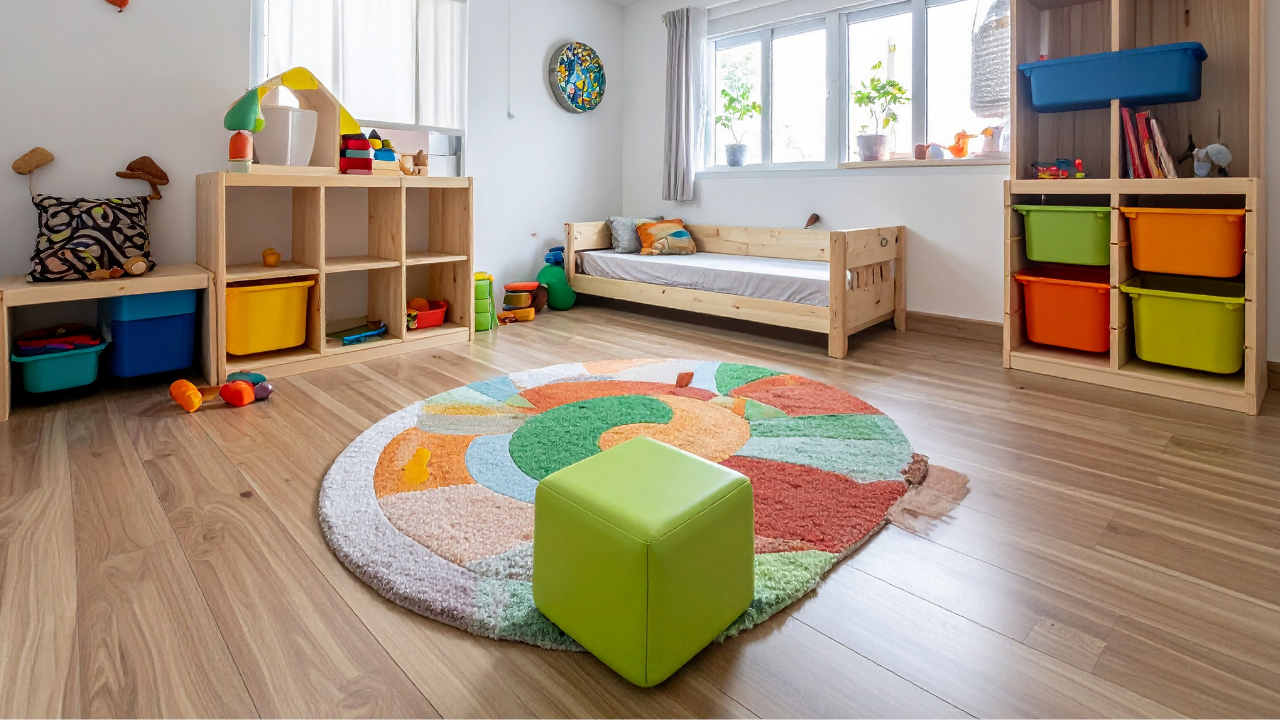
A rug that matches the flooring too closely can actually work against you. As Gokhale says, “a rug that blends into the floor flattens the room. A touch of contrast is what gives that floor its depth back.” Shape plays its own role, especially in small and congested spaces. She notes that “round or rounded-corner rugs soften a small room’s hard edges far better than a rigid rectangle,” adding that “better still, go for customised shapes that befit your furniture arrangement” and better suit even a small room.So, which brings us to the fact that “a rug was never just a soft landing for your feet. Placed with intent, it’s the single most persuasive illusion in a designer’s arsenal”, as Gokhale adds.So before you reach for that familiar 5×7, it might be worth measuring your room the way a designer would.