
In many Indian homes, coconuts are part of everyday life, from the chutney on the breakfast table to the puja ceremony and a cool glass of tender coconut water on a hot afternoon. Once the water is drunk and the kernel is scooped out, the shell usually ends up in the dustbin. That is a pity, because coconut shells are tough, naturally water-resistant and pleasantly rustic to look at. With a little cleaning and a few basic supplies, they can become pretty things for your balcony, and you will not spend much at all. Here are some easy ideas.
Start by preparing the shells
Good prep makes the difference between a neat project and a smelly one. Scoop out any leftover coconut meat, then scrub the inside with a brush and warm water. Let the shells dry completely in the sun for a day or two, since damp shells can grow mould. Sand the rough edges lightly, and rub the outside with a cloth to bring out the natural brown. If you want a smoother finish, you can apply a coat of clear varnish. Be careful while handling and cutting shells, as they are hard and can split sharply.
Hanging planters for a green corner
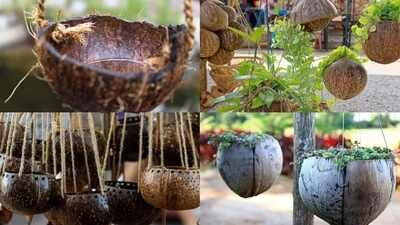
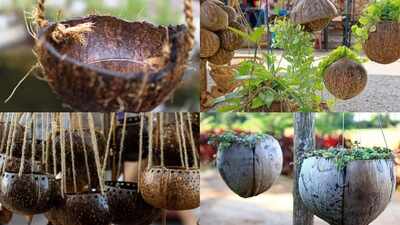
A halved coconut shell is a ready-made pot. Ask an adult to drill three or four small holes at the rim, thread strong jute rope or coir through them, and knot it at the top. Drill one tiny hole at the bottom so extra water can drain out. Fill with a light potting mix and plant succulents, spider plants, money plants or herbs like mint. Hang a few at different heights near a window or railing. Coconut shells hold moisture well, so water lightly and watch that they do not get soggy.
Bird feeders that bring chirping visitors
A coconut shell makes a charming bird feeder, and the birds will certainly appreciate it. Cut a half shell, drill holes for hanging and fill it with grains, millet, sunflower seeds or small pieces of fruit. Hang it in a quiet, shaded spot with some cover nearby, so birds feel safe. Avoid feeding salty, fried or spicy food, since it can harm them. Clean the feeder every few days to stop mould and bacteria from building up, and take care to keep it dry during rain.
A simple water bowl for birds
In the heat of summer, a shallow bowl of water can mean as much to birds as food. A half coconut shell, hung or placed securely on a ledge, works well as a drinking dish. Fill it with fresh water every day and give it a good scrub often. This also stops mosquitoes from laying eggs in stagnant water, a real concern in many Indian cities. Place it where cats and crows cannot easily reach, and make sure it is steady so it does not tip over in the wind.
Miniature garden decorations
Smaller shell pieces can be turned into cute decorations for your plant corner. Paint them in bright colours and use them as little pots for tiny plants, or turn them into mini fairy-garden houses with twigs and pebbles. You can also stack a few shells of different sizes to make a quirky plant stand, held together with strong glue. Weather-proof paint and a clear coat will help them last through sun and rain. These small touches add personality to a balcony without taking up much space.
Easy candle holders and diya bowls
Coconut shells also look beautiful as candle holders, especially around festivals like Diwali and Karthigai Deepam. Fill a shell with wax and a wick, or place a tea light inside, and set it on a heat-safe surface. They look warm and earthy, and they make a lovely table centrepiece when grouped together. Never leave a lit candle or diya unattended, and keep it away from curtains, dry plants and children. Use only on a stable, non-flammable base, and avoid hanging lit candles.
A few tips for making your creations last
Dry the shells well and use waterproof glue and paint for anything that will sit outside. Check hanging ropes and knots regularly, because weight and weather can weaken them over time. Do not hang heavy planters from weak railings or hooks. Rotate your plants and clean your feeders often. And if you have kids at home, let them help with painting and decorating, and keep the cutting and drilling for adults. It is a fun, low-cost weekend project that gives something useful a second life.
Disclaimer:
This article is for general informational and creative purposes only. Results may vary depending on the materials, tools and techniques used. Cutting and drilling coconut shells can be hazardous, so use tools carefully and keep them away from children. Keep bird feeders and water bowls clean to prevent disease and mosquito breeding, and never leave burning candles or diyas unattended. Check that planters and hooks can safely bear the weight before hanging them.