
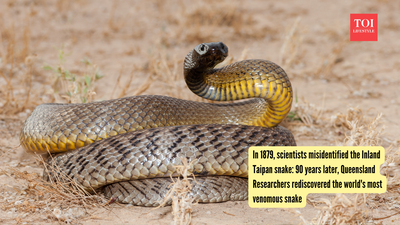
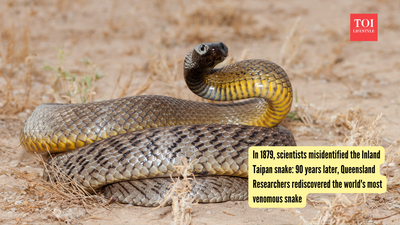
The Inland Taipan is the most venomous snake on Earth, and its single sting of venom is potent enough to kill about 100 human beings.But did you know that this venomous slitherer remained hidden and misidentified for nearly a century?This snake existed only on paper, with just a handful of specimens, a simple description, and then silence. No sightings, no new evidence, nothing to confirm it was even still out there. Some experts began to wonder if it had ever really existed as a distinct species at all, or whether early naturalists had simply gotten it wrong.Then, decades later, a chance discovery in a remote corner of outback Queensland changed everything!
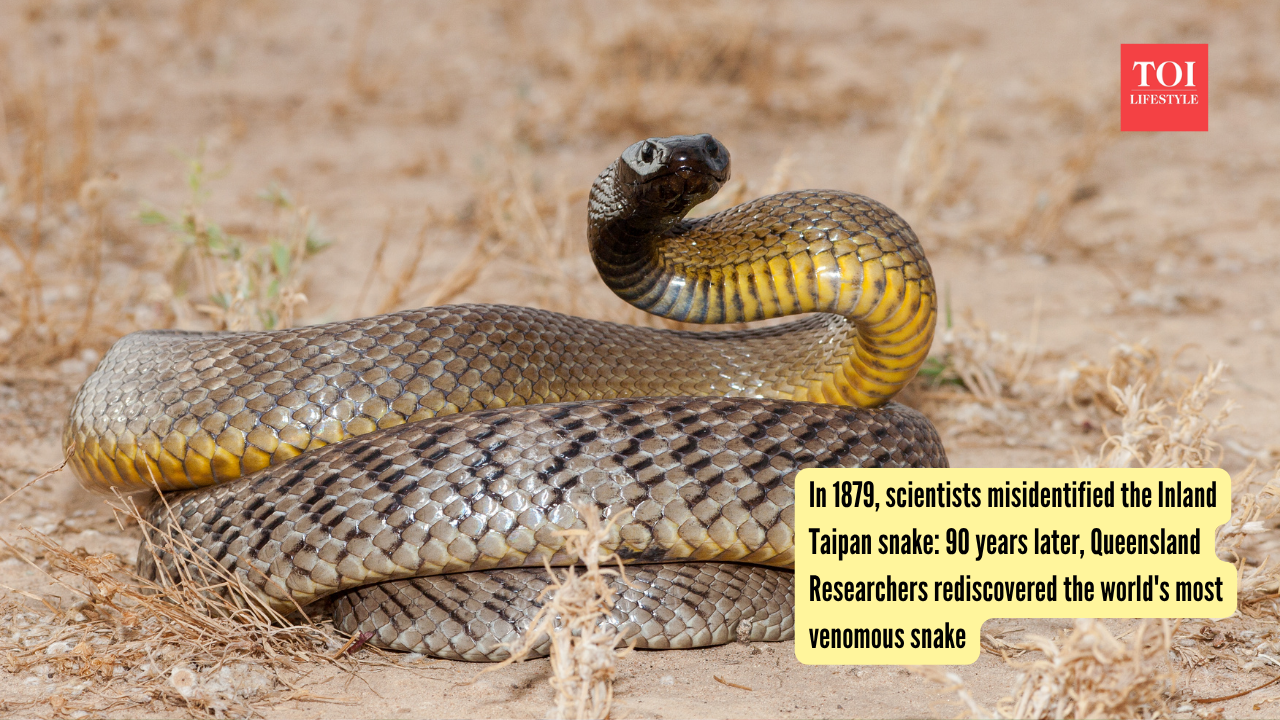
Inland Taipan is among the most venomous snakes in the world
Inland Taipan was first misnamed and then forgotten!
In 1879, naturalist Frederick McCoy examined two specimens collected near the junction of the Murray and Darling rivers in Victoria and classified them as a type of brown snake, calling it Diemenia microlepidota, according to the Australian Museum.
CJP Jantar Mantar Protest Updates
William John Macleay offered his own description in 1882. But after that, nothing. No further specimens surfaced, and for the next nine decades, the species existed only as a footnote, unverified and largely forgotten.
Doubts grow as decades pass without a trace
The snake was not sighted for generations, so some scientists began questioning whether the original identification had even been correct. A theory circulated that McCoy’s specimen may simply have been a juvenile coastal taipan, mislabelled rather than genuinely distinct. The species had almost become a scientific ghost, referenced in old records but absent from any living evidence anyone could even signal.
A ray of hope once again came only about a century later
The turning point came in September 1972, when a grazier near Windorah, in Queensland’s remote Channel Country, sent an unidentified snake head to the Queensland Museum. According to Alchetron, Herpetologists Jeanette Covacevich and Charles Tanner recognised something unusual and travelled to the site themselves. What they found there finally answered a question that had lingered since the nineteenth century.
Thirteen live snakes end a ninety-year mystery
At the site, Covacevich and Tanner located thirteen living specimens, confirming that the long-lost species was very much alive. It was then rediscovered as Parademansia microlepidotus, later reclassified within the taipan genus Oxyuranus. After ninety years of silence, science finally had living proof of a snake many had assumed was either extinct or never truly distinct in the first place.
The world’s most venomous snake, hiding in plain sight
Subsequent research revealed just how extraordinary this rediscovery was. Based on toxicity in laboratory testing, the inland taipan carries the most potent venom of any land snake on Earth, a single bite is theoretically powerful enough to kill dozens of adult humans. But, despite this harmful image and highly potent venom, it remains shy, reclusive, and hidden safely away in Australia’s harsh outback interior.