
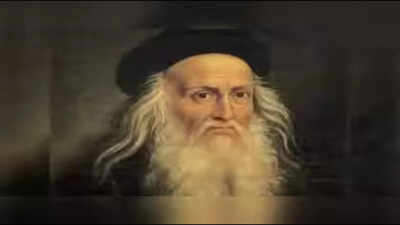
Leonardo da Vinci was an Italian Renaissance painter, engineer, scientist and inventor. He is most popularly known for painting the Mona Lisa and The Last Supper. But beyond contributing to art, he also filled thousands of notebook pages with studies of anatomy, water, flight and machines, being called the ultimate “Renaissance man” because he was curious about almost everything.Words from these pages often continue to resonate even today and people read them as profound words of wisdom.He once talked about a beautiful idea that we say “I love it” or “I hate it” dozens of times a day. It might be a song, a city, a food, a sport, a person or any activity in general. Most of the time we say it in a second, long before we have learned anything completely about it.But what we feel instantly is usually borrowed. We generally base our opinions on our friends, on the internet, on one bad experience, or on what everyone around us seems to believe. They are easy to adopt and just as easy to drop when the mood changesLet us read further to know what da Vinci meant exactly.
Quote of the day
One has no right to love or hate anything if one has not acquired a thorough knowledge of its nature. Great love springs from great knowledge of the beloved object, and if you know it but little, you will be able to love it only a little or not at all
Leonardo da Vinci
What does the quote mean?
On the surface, Leonardo da Vinci’s line is simple. You have no right to love or hate something until you really know it. Great love grows from great knowledge, and if you know little, you will love little, or not at all.Leonardo is making two points here. First, strong feelings should be earned. Loving or hating something without understanding it is guesswork in disguise as certainty.Second, love depends on knowledge. The more closely you look at something, the more you notice how it works, why it is the way it is, and what is beautiful in it. Admiration deepens as understanding deepens.This was how Leonardo lived. He studied bodies to understand muscles before painting them. He watched water for years and observed birds to think about flight. Leonardo argues that studying creation closely does not mean loving God less. It is a deeper way of loving, because love passes through knowledge.According to Goodreads, the quote belongs to Leonardo da Vinci. But it was originally written in Italian, “Ché, in vero, il grande amore nasce dalla gran cognizione della cosa che si ama e, se tu non la conoscerai, poco o nulla la potrai amare.”This originally belongs to the Trattato della Pittura (Treatise on Painting) compiled by his student Francesco Melzi after da Vinci’s death.
How is the quote relevant today?
Surrounded by the digital age, think about social media. We react in seconds and instantly like, share, and get outraged. We read headlines but not articles. People base their opinions about countries, communities, or public figures on a short clip or a single post. But here, Leonardo’s sentence works like a pause button. Before reacting, it asks whether I have actually learned about this.Similarly, it also applies closer to home. A student chooses a career because it looks glamorous, then feels let down by the real work.Someone says they hate maths or history after one bad teacher. A person falls in love with an image of someone and struggles when they meet the real human being. Knowing something properly changes the feeling. Sometimes it turns into love, and sometimes into a calmer and fairer dislike. Both are better than a blind reaction.