

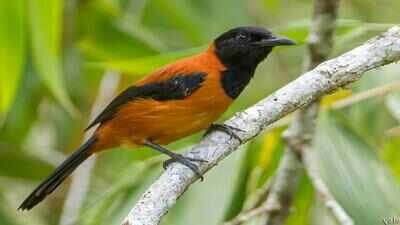
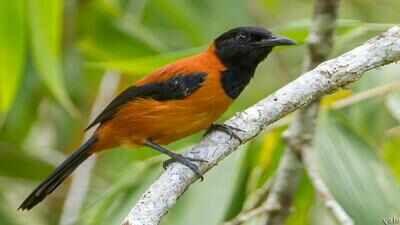
Deep inside the tropical rainforests of New Guinea lives a bird that looks almost too beautiful to be deadly! She is bright, she has an orange-chestnut body and a gorgeous glossy black head and wings are so beautiful. Meet hooded pitohui (Pitohui dichrous) which is reportedly the only bird on Earth with a toxic death touch! Yes, you read that right. The bird’s feathers and skin carry a powerful neurotoxin belonging to the same chemical family found in some of the world’s most poisonous frogs.Imagine just touching this bird and feeling a burning sensation and numbness which can soon turn fatal.Meet hooded pitohuiAlso known as the world’s poisonous bird, the hooded pitohui became a scientific sensation when researchers discovered that it carried toxins in its feathers and skin which can cause death. However, it is not technically the only poisonous bird on Earth.Other New Guinea species, including the variable pitohui and the blue-capped ifrita. This bird too has similar toxins. As per a 1992 study published in the journal Science by ornithologist John P. Dumbacher and his colleagues, three species of pitohui contained homobatrachotoxin, a powerful chemical previously associated with poison-dart frogs.Why is the hooded pitohui considered poisonous
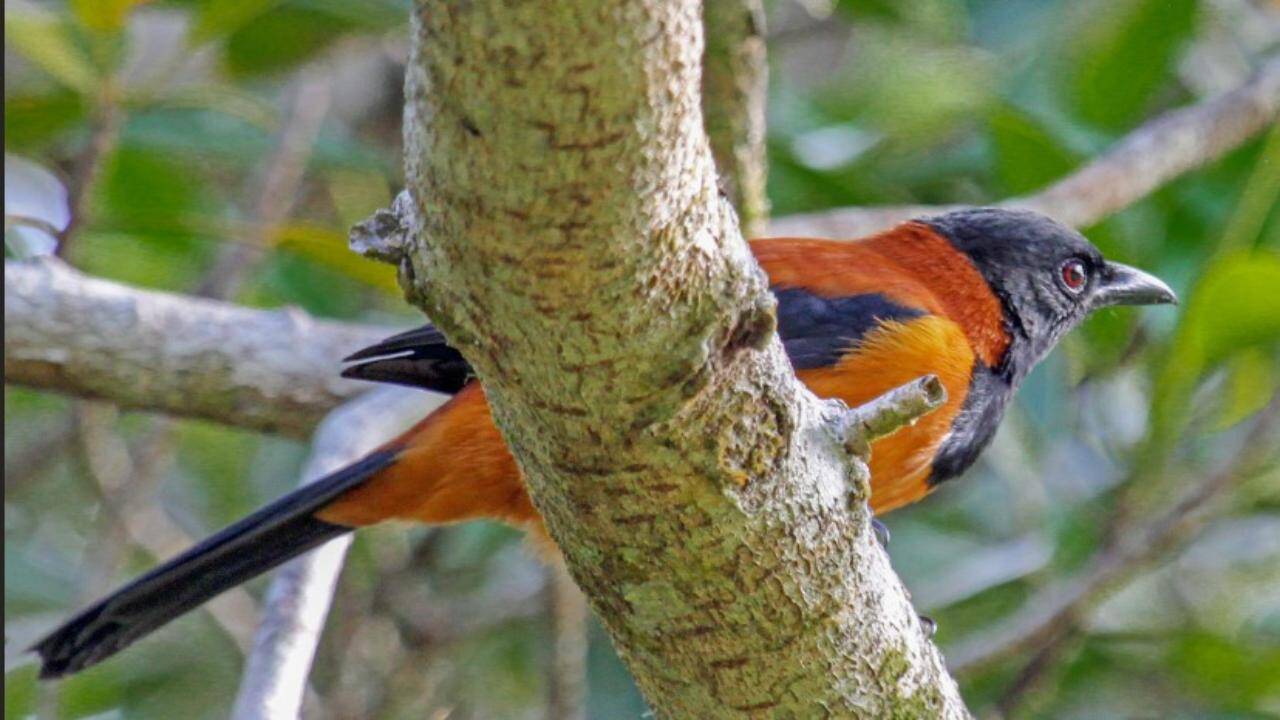
Toxic bird
There is a group of chemicals called batrachotoxins which are potent steroidal alkaloid neurotoxins that interfere with voltage-gated sodium channels in nerve and muscle cells.The consequences can be severe. Depending on the exposure and dose, these toxins can cause tingling, burning sensations, numbness, muscular problems and potentially life-threatening effects.The 1992 research found that toxin concentrations were highest in the hooded pitohui’s skin and feathers. This explains why the bird’s touch has attracted so much attention.During the original research, scientists experienced burning, sneezing and numbness after handling specimens. The effects were particularly noticeable when they came into contact with their mouths and nasal tissues.The expression ‘death touch’ is sensationalThere is no established evidence that simply touching a hooded pitohui kills a person. The documented human reactions include irritation, burning and numbness, while the toxins themselves are capable of causing severe toxicity at sufficient doses.Where to spot hooded pitohuiThe hooded pitohui is native to the island of New Guinea, which is shared by Indonesia and Papua New Guinea.Its habitat includes tropical rainforests, hill forests and lower montane forests. It can be found at different forest levels, from the understorey to the canopy, where it searches for food.For birdwatchers hoping to spot one, Papua New Guinea is an important destination. The bird has been recorded in places such as Varirata National Park, near Port Moresby, and in forested regions of Morobe Province.The hooded pitohui is approximately 22–23 cm long. Its striking appearance makes identification relatively easy: it has a black head, throat, upper breast, wings and tail, contrasting with rich orange-chestnut plumage across its back and lower body.How does the bird acquire its poison?One of the most fascinating aspects of the hooded pitohui is that it does not appear to manufacture its poison independently.Scientists believe it obtains the toxins through its diet. Research has linked the presence of batrachotoxins in these birds to their consumption of small beetles belonging to the genus Choresine.These beetles contain compounds that the birds can accumulate in their bodies. The toxins are subsequently found in their skin and feathers, making contact potentially unpleasant for predators and other animals.Other poisonous birds in the worldBesides the hooded pitohui, there is the blue-capped ifrita. It is a small bird found in the mountainous forests of New Guinea. Researchers discovered batrachotoxins in its skin and feathers in a study published in PNAS in 2000.For humans, the lesson is straightforward: the hooded pitohui may look like an ordinary forest songbird, but it is certainly not one to handle casually.