



You are walking through a shopping mall when you notice someone you know approaching from the opposite direction. You recognise them immediately. But instead of smiling or saying hello, you look at your phone, turn towards a shop window or suddenly become very interested in something on the other side of the corridor.You are not angry with the person. You may even like them. But the thought of stopping, exchanging greetings and getting into a conversation you had not planned for feels inconvenient. So you keep walking and hope they do not notice you. This small social behaviour is more common than people might admit. While it is tempting to call it rude or unfriendly, psychology and social research offer another way to understand it: people sometimes manage eye contact and attention to control whether an interaction begins.
Why looking away can prevent a conversation
Eye contact is not just a way of showing attention. It can also signal that someone is available for interaction. A brief look, smile or nod can be enough to begin an exchange. Once two people acknowledge each other, ignoring the opportunity to greet one another may feel awkward. Looking away before that moment can help someone avoid the expectation of stopping.A study published in PLOS One in 2020, titled Implying social interaction and its influence on gaze behavior to the eyes, examined how people look at others in situations that suggest a possible social interaction.The researchers found that people adjusted their gaze depending on the social context. In everyday public settings, people often follow an unwritten rule of briefly acknowledging another person’s presence and then looking away. This behaviour is known as civil inattention.The concept, introduced by sociologist Erving Goffman, describes how people recognise one another in public without inviting further interaction. A quick glance communicates that the other person has been noticed, while looking away signals that no conversation is necessarily expected.When someone recognises an acquaintance but deliberately avoids eye contact, they may be taking this behaviour a step further to prevent an interaction from starting.
Is it always social anxiety ?
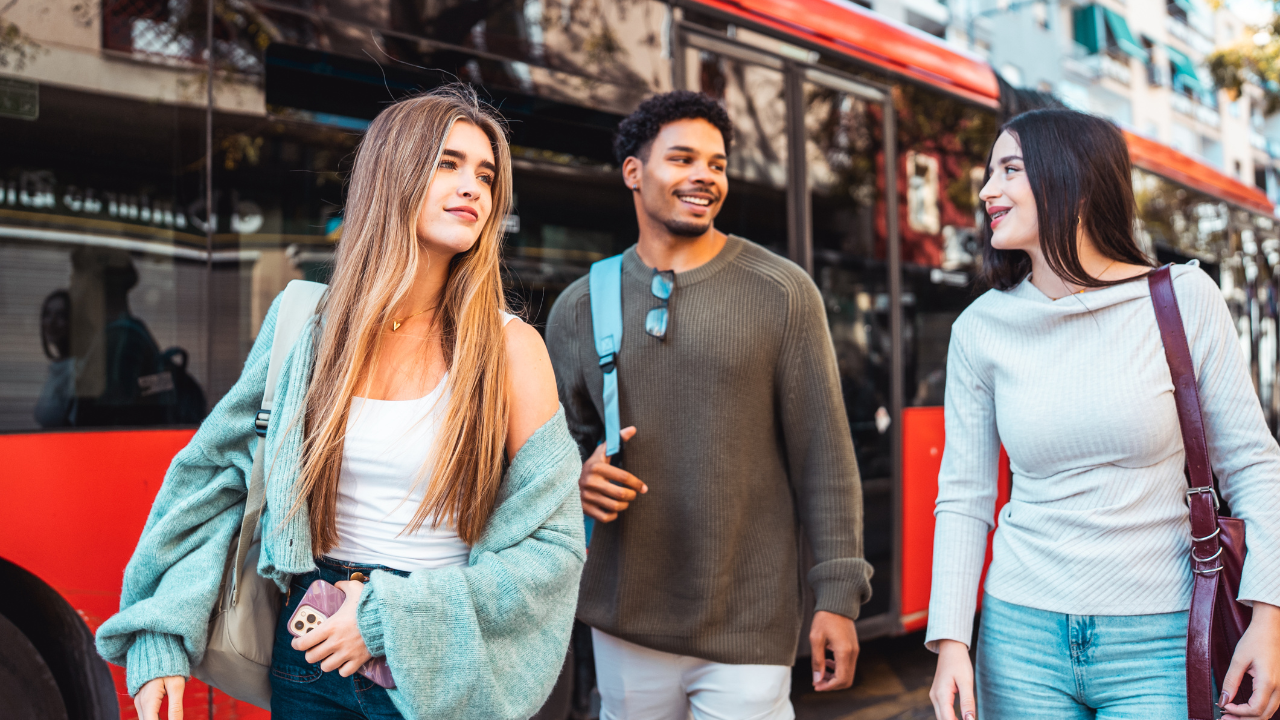
Photo: Canva
Not necessarily. Avoiding an unexpected conversation does not automatically mean someone is socially anxious. For some people, the reason may be quite ordinary. They could be in a hurry, distracted, tired or simply not in the mood to talk. They may also feel uncomfortable with spontaneous conversations because they do not know how long the exchange will last or what the other person might expect.However, anxiety can play a role in some cases. A 2021 study examined how people looked at others in an everyday social situation. The researchers studied 30 students and found that participants with higher levels of social anxiety showed greater avoidance of looking at another person. They made fewer eye movements towards the individual and spent less time looking at him.The researchers suggested that avoiding visual attention could be a way of reducing the possibility of social interaction in an unpredictable setting. This does not mean everyone who looks away from an acquaintance has social anxiety. The study examined responses to an unfamiliar person, not people deliberately ignoring friends or colleagues. But it shows how avoiding eye contact can become a way of managing social discomfort.
Why an unexpected meeting can feel different from a planned one
A planned meeting comes with some preparation. You know whom you are going to see, roughly how long you will spend together and what the occasion involves. An unexpected encounter offers none of that. You may be on your way home, running errands or trying to finish something before a deadline. Suddenly, you have to decide whether to stop, how warmly to greet the person and whether you have time for a longer conversation.Research on public encounters also shows that meeting someone familiar involves a different set of expectations from passing a stranger. In a 2018 study, researchers Elwys De Stefani and Lorenza Mondada examined how people initiate interactions in public spaces.Their analysis showed that encounters between acquaintances and strangers follow different patterns. Recognising someone can bring expectations of greeting, identifying the relationship and establishing a conversation. That social expectation may be precisely what someone wants to avoid when they are not prepared to interact.
What this behaviour may actually say
If you sometimes pretend not to see someone you know, it is worth asking yourself what you are trying to avoid. Is it the person, the conversation or simply the interruption to what you were doing? There is a difference between not wanting to speak at that particular moment and consistently avoiding someone because interacting with them causes distress.You also do not have to turn every public encounter into a conversation. A brief smile or nod can acknowledge someone without committing you to a lengthy exchange. If you are genuinely in a hurry, a simple greeting followed by an explanation that you need to leave can be enough.Sometimes, a person is not avoiding the relationship. They are avoiding an interaction they did not expect, did not prepare for or simply do not have the energy to manage at that moment.