

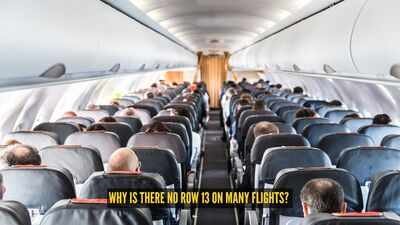
Whether you’re a frequent flyer or someone who travels only occasionally, there’s a good chance you’ve never paid much attention to the row numbers on an aircraft. But the next time you book a flight or settle into your seat, take a closer look. On many airlines, you’ll notice that after Row 12 comes Row 14, with Row 13 missing entirely.At first glance, it may seem like a numbering error or a design choice. But the real reason is rooted in something much older than aviation itself: superstition.For decades, several airlines around the world have chosen to leave out Row 13, not because it poses any risk, but because the number is considered unlucky in many cultures.
A centuries-old belief that still influences travel
The number 13 has long carried negative associations in many Western countries. Historians trace this belief back to ancient traditions, mythology, and religious references, all of which gradually contributed to the idea that 13 brings bad luck. Even today, many hotels, office buildings, and hospitals skip the 13th floor altogether, moving directly from the 12th to the 14th.The aviation industry has adopted a similar approach.Since flying can already make some passengers anxious, airlines often avoid assigning Row 13 altogether. The idea is simple: if skipping one number can make even a small section of travelers feel more comfortable, there’s little downside to doing so.
Is Row 13 actually unsafe?
The answer is no.There is no evidence to suggest that any particular row on an aircraft is inherently safer or more dangerous simply because of its number. Every commercial aircraft is designed, certified, and operated under the same strict international safety standards, regardless of how the seats are numbered.Skipping Row 13 is a purely passenger-facing decision and has no impact on the aircraft’s design, safety, or operation.
Not every airline follows the practice
Interestingly, not all airlines skip Row 13.Many carriers continue to use the number without hesitation, particularly in regions where it does not carry the same cultural significance. Others have their own traditions. For example, a few European airlines omit Row 17 because the number is considered unlucky in parts of Italy.This means the presence or absence of Row 13 often depends on the airline’s history, operating region, and the preferences of its passengers.
A small change that reflects passenger psychology
Commercial aviation is built around both safety and customer experience. From cabin layouts to meal choices, airlines regularly make decisions that improve passenger comfort, even when those changes have no technical necessity.Skipping Row 13 is one such example. While it does not change the way an aircraft flies, it helps avoid unnecessary discomfort for travelers who may be uneasy about the number.So, the next time you notice that your flight jumps from Row 12 to Row 14, you’ll know there’s no hidden mystery behind it. It’s simply a reflection of how longstanding cultural beliefs continue to influence even the most modern forms of travel.Thumb image: Canva (for representative purposes only)