

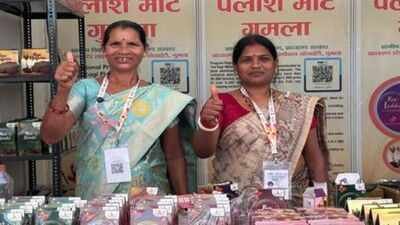
A contribution of Rs 2 may seem too small to change a family’s financial situation. But for Kunwari Barwa, a woman from Gumla district in Jharkhand, those small savings became the starting point of a much larger journey. What began with a self-help group (SHG) in her village gradually developed into a women-led agricultural enterprise built around ragi, also known as finger millet.Today, the farmer producer organisation (FPO) associated with her work has grown from 381 members in 2022 to 1,501, according to the Press Information Bureau (PIB). Its activities include supporting ragi cultivation, collecting and storing the harvest, and preparing products such as ragi laddoos, thekua and savoury snacks. The collective reports monthly product sales of around Rs 6 lakh to Rs 7 lakh and provides regular employment to more than 150 women.For Barwa, the journey has been about more than building a business. It has also meant learning to access credit, earning through agriculture and helping other women find opportunities beyond their homes.
How a Rs 2 saving habit became the beginning of a new livelihood
Barwa’s journey started when women in her village came together to form a self-help group. Each member began saving just Rs 2, creating a small pool of money that members could access when they needed financial support. Barwa encouraged more women to join the group and eventually took a loan from its collective savings to purchase a cow. This gave her an opportunity to add another source of income to her household.Her next step came through bank-linked credit. With access to financial support, she purchased equipment for vegetable cultivation and began growing and selling produce. The income helped her contribute to family expenses and pay for her children’s education. These early experiences also introduced her to the value of collective savings and organised financial support. Instead of depending entirely on individual resources, women could use the strength of their group to access loans and explore livelihood opportunities. As more women became involved, their activities gradually expanded beyond individual efforts. The groups began working together, laying the foundation for a larger agricultural enterprise.
From 381 members to a 1,501-member ragi enterprise
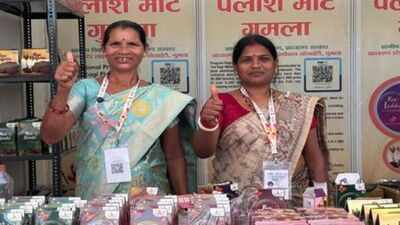
A major development came in 2022, when the women came together to establish a farmer producer organisation with 381 members. Barwa says the membership has since increased to 1,501. The collective focuses on different stages of the ragi value chain. It supports farmers in cultivating the crop, brings their harvest together for collection and storage, and turns the grain into products that can be sold to customers. Rather than selling only raw agricultural produce, the women have added value by preparing food items such as ragi laddoos, thekua and savoury snacks. This has opened up another source of income and created opportunities for women to participate in processing and selling the products.The organisation’s products first reached customers through small tables and stalls in Gumla. Over time, the women began participating in fairs and exhibitions in cities such as Delhi and Hyderabad, giving them access to customers beyond their district. According to the PIB profile, Barwa estimates that the collective’s monthly product sales are around Rs 6 lakh to Rs 7 lakh. The enterprise provides regular work to more than 150 women and brings in additional workers when larger orders arrive.The growth of the FPO also reflects a wider effort to strengthen ragi cultivation and processing in Gumla. An Indian Council of Agricultural Research (ICAR) profile on the organisation describes how collective farming, processing, packaging and marketing can help rural women participate in more stages of the agricultural value chain. It identifies Bhagwati Devi as the FPO’s chairperson, while the PIB separately highlights Barwa’s journey and contribution to the collective.
‘Now we travel by train and even by plane’
For the women involved, the enterprise has created opportunities that extend beyond earning money. Participating in fairs and exhibitions has allowed members to travel to different cities, interact with customers and present their products to new audiences. Barwa described this change by recalling how some women had never even seen a railway line before becoming part of the initiative. Today, they travel by train and even by plane to participate in business-related events.“Some of our women had never even seen a railway line. Now we travel by train and even by plane,” she said, as quoted by the PIB. Such experiences have introduced the women to new places and markets while giving them a chance to take part in activities that may once have seemed beyond their reach.Barwa’s story shows how a small savings habit can become the starting point for a larger livelihood when women have access to collective support, credit and markets. From saving Rs 2 to being part of a 1,501-member enterprise, her journey reflects the possibilities that can emerge when rural women work together to turn local agricultural produce into a business. The ragi collective in Gumla is not just selling food products. It is creating work, building market connections and giving women greater opportunities to participate in their local economy.