
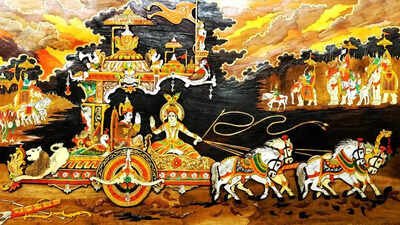
This evening, along riverbanks in Bihar and eastern Uttar Pradesh, families gather for the Sandhya Arghya of Chhath Puja. Fasting devotees stand in the water and offer milk and water to the setting sun. It is one of the oldest ways to say thank you, directed at the source of light and life itself.Chapter 3 Verse 11 of the Bhagavad Gita explains why such thanks matter. Krishna tells Arjuna to nourish the devas through offering, so that the devas in turn nourish people. By supporting one another in this way, he says, both reach the highest good. The very next verse adds that anyone who enjoys these gifts without offering anything back is no better than a thief.
Parasparam Means Mutual
The key word here is parasparam, meaning each other. Life in the Gita runs on a cycle of giving and receiving.Sunlight grows the crops. An offering of thanks completes the circle.
Taking Without Thanks Breaks the Cycle
Krishna’s word for the one who only takes is stena, a thief. It is a blunt label, chosen on purpose.In daily life, this can look like accepting a parent’s help for years without a word of thanks. The help may continue, but something in the relationship thins.
Gratitude Shifts Attention
A short thank-you each morning trains the mind to notice what is already working. Over months, this changes how problems get approached.A person who sees support around them tends to act with more confidence.
Destiny Grows From Small Habits
In the Gita’s view, actions repeated daily shape what follows. Gratitude is one such action.A habit of giving thanks builds goodwill with colleagues and neighbours alike. That goodwill often returns in ways nobody planned.
Arjuna’s Strength Had Many Sources
Krishna’s teaching on offering reminded Arjuna that many hands shaped his skill and standing.Duty, in this light, became a way of giving back.
Evening at the Ghat
Verse 11 of Chapter 3 links thankful offering with shared wellbeing. Chhath gives that idea a powerful public form.At a ghat in Patna tonight, an elderly woman stands waist-deep in the river as the sun sets. Her grandson waits on the steps, holding the bamboo basket of thekua and fruit.