
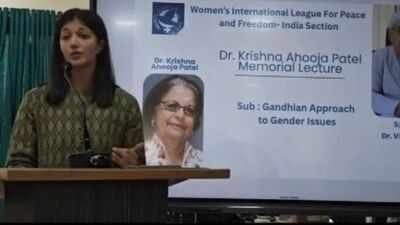
Krishna Ahooja-Patel is a woman who devoted her life towards peace, women’s rights and social justice. She was being remembered at a memorial lecture in Ahmedabad. Among those invited to speak was her granddaughter, Nia Patel. But as Nia spoke about the experiences of women in India and raised concerns about deforestation in the name of development, she was cut in the middle by a male guest who asked her to cut short and close.For Nia, the interruption was particularly uncomfortable because she was invited to speak at a memorial dedicated to her own grandmother, Dr Krishna Ahooja-Patel, an Indian women’s rights advocate, lawyer and peace activist. She was among 1,000 women collectively nominated for the 2005 Nobel Peace Prize.Nia took to Instagram and shared a video from the event. She described the experience as “silencing a woman in real time” and questioned the gap between institutions that speak about gender justice.The video has over a million viewsThe video starts with,“My name is Nia and I was invited to speak at my grandmother’s memorial lecture in Ahmedabad.” She then starts explaining the reason behind.But before that, let’s find out more about Dr Krishna Ahooja-Patel.Who was Dr Krishna Ahooja-Patel?Born in 1929, Dr Krishna Ahooja-Patel was the Indian peace activist nominated for the 2005 Nobel Peace Prize. She was a women’s rights campaigner who spent around 25 years working within the United Nations system. She worked on issues concerning labour, migration, women’s employment, development and gender equality.She studied political science at Aligarh and went on to earn a PhD in International Relations from the Graduate Institute of International Studies in Geneva. She also trained in law at London’s Inner Temple and worked as a lawyer and journalist before taking up international roles.She served as president of the Women’s International League for Peace and Freedom (WILPF) from 2001 to 2004. The organisation, which works towards peace, disarmament and women’s rights, remembered her as a tireless advocate of peace, social justice and women’s empowerment after her death in December 2018. In 2005, her name was included in the initiative 1000 Women for the 2005 Nobel Peace Prize.One of Ahooja-Patel’s most memorable contributions was highlighting the unequal economic position of women.‘You cannot speak about gender justice while silencing a woman’Against this background, Nia said that her speech at the Ahmedabad memorial was an attempt to connect her grandmother’s legacy with what she had personally witnessed.She explained that she was speaking about women in India and issues such as deforestation carried out in the name of development. These were subjects she felt were connected to the broader questions of justice, equality and the environment when she was asked to cut it short.“Moments like this show how deeply performative these institutions can become,” Nia said in the video.She further said, “If you don’t have respect for the other person, especially when they are honouring a woman whose life was spent fighting for respect, then your message means nothing”.When a memorial becomes a reminder of unfinished struggles
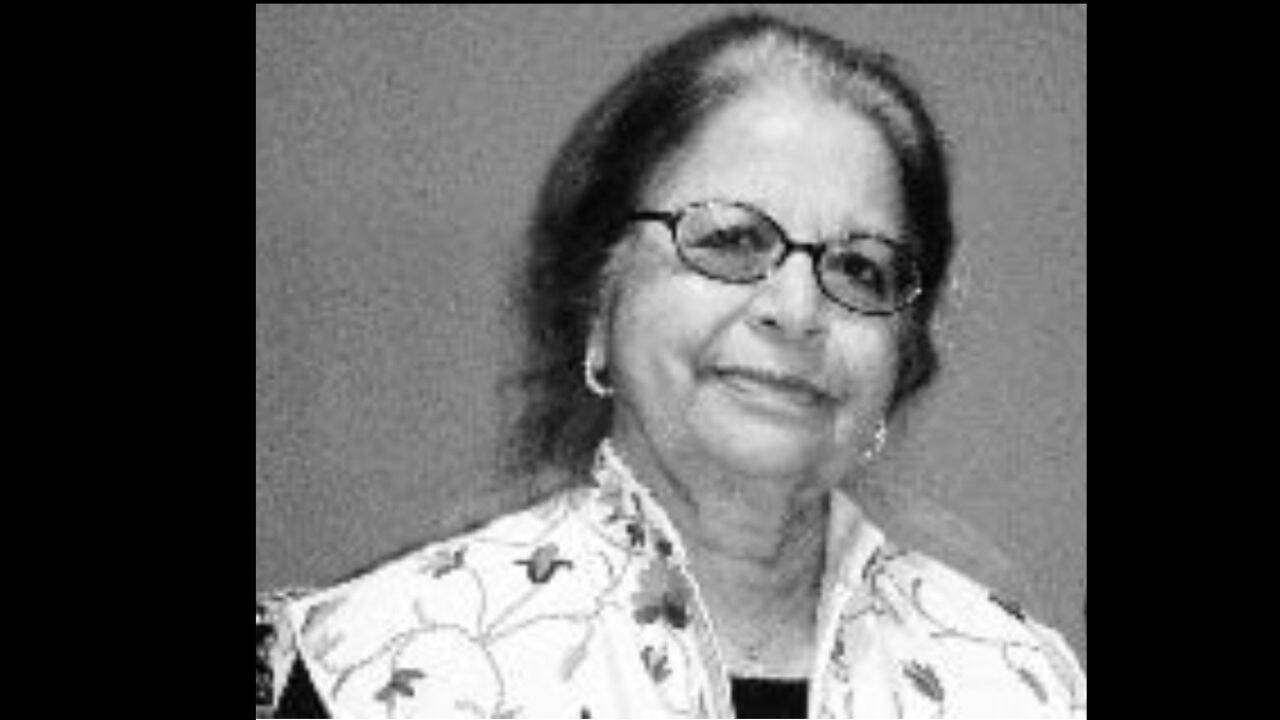
Dr Krishna Ahooja-Patel (PC: wilpf.org)
Nia’s grandmother had spent decades working within international institutions, advocating for women’s participation, economic equality and peace. Yet, at an event organised in her memorial, Nia says she experienced an interruption.Nia’s video asks a larger question about the meaning of legacy: what does it mean to honour a woman who fought for equality if the women speaking about her are not given the same respect?For her, remembering her grandmother is not simply about celebrating what she achieved decades ago. It is also about carrying forward the questions she spent her life raising. And, as Nia’s closing words suggest, respecting a woman’s right to speak is perhaps one of the simplest ways to begin.